At a glance
Key facts
The essentials to compare before deciding whether this breed fits your home and routine.
- Size
- Medium
- Lifespan
- 12 to 14 years
- Energy
- Medium to high
- Temperament
- Sociable, energetic and variable between individuals
- Good with children
- Often good with sensible supervision
- Exercise
- 60 to 90 minutes a day for most adults
- Trainability
- Beginner friendly
- Grooming
- Brush several times weekly with professional clipping every couple of months
- Estimated monthly cost, GBP
- £90 to £170 per month
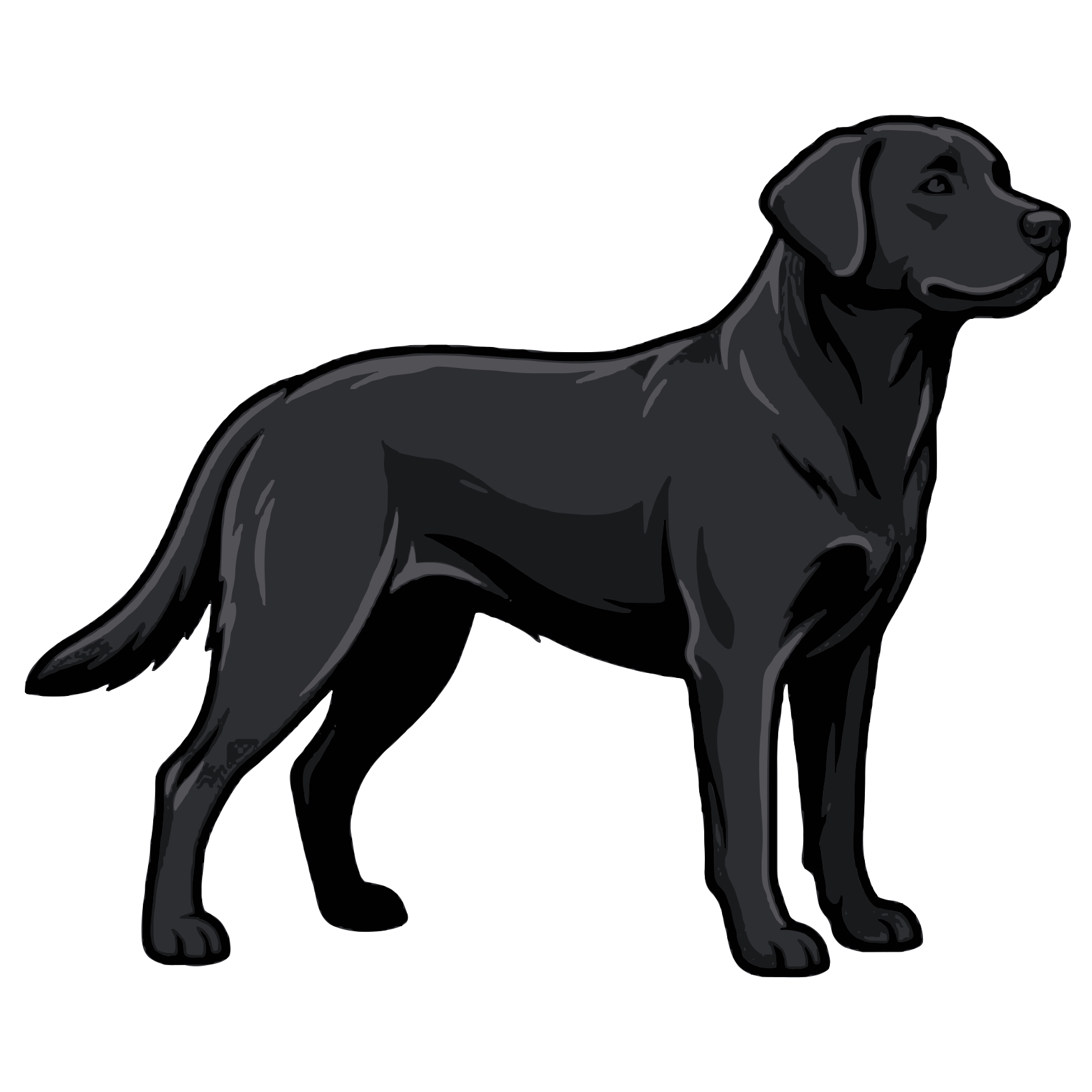
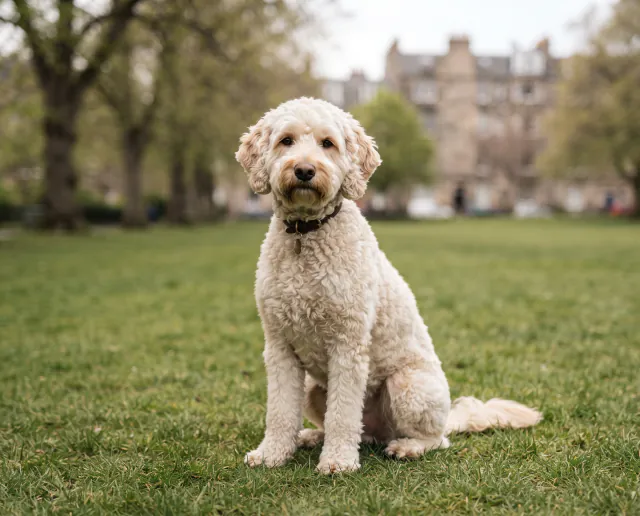
The Labradoodle started as a working experiment rather than a fashion. During the late 1980s an Australian guide dog programme crossed a Labrador Retriever with a Standard Poodle for a blind woman whose husband reacted badly to dog hair. The intention was an assistance dog with a Labrador’s working temperament and a coat that might shed less. Only part of that litter turned out as hoped, and the rest of the puppies were ordinary shedding dogs. That single detail is the most useful thing anyone considering the cross can know. The Labradoodle remains a crossbreed rather than a recognised pedigree breed, with no kennel club breed standard, so type and temperament vary far more than they would in a registered breed.
Genes do not blend the way marketing implies. A first cross between two breeds produces puppies carrying a shuffled mixture of both, not a dependable average, so adult height, coat texture, shedding and character can differ noticeably between littermates raised side by side. Later generations, including doodle to doodle matings and back-crosses to a Poodle, shift the odds without removing the uncertainty. Poodles also come in three sizes, which is why one Labradoodle finishes at knee height and another reaches thirty kilograms.
Suitability
Active families, retired couples who still walk daily and organised first-time owners all keep Labradoodles successfully. The common thread is time. Both parent breeds were bred to work alongside people, and the cross rarely does well left alone from morning until evening. The size question complicates household planning, since a puppy advertised as medium may grow into a dog that fills a small car boot and eats accordingly. Allergy is the other frequent misunderstanding. No coat can be guaranteed to suit an allergic person, and reactions relate to dander and saliva as much as to hair, so an affected household should spend time with the specific adult dog before committing.
Exercise
Most healthy adults want an hour to ninety minutes daily, and dogs with Standard Poodle and working Labrador ancestry often want more. Split the time rather than attempting one long march, and include something with a purpose. Retrieving, scent searches, swimming and trick training all suit the mix well. Adolescence between roughly eight and eighteen months is when problems surface, since a bouncy dog with poor impulse control is hard to walk politely. Loose lead work and recall should be established long before then. Puppies need controlled activity while joints develop, so avoid forced running and repeated jumping. Both parent breeds are enthusiastic about food, and weight gain quietly worsens any joint problem.
Grooming
Coat care is the recurring commitment and is regularly underestimated. Labradoodle coats are usually described as hair, fleece or wool. Hair coats are flat and shed like a Labrador. Fleece coats wave and need real maintenance. Wool coats are tightly curled and mat close to the skin while looking perfectly tidy on the surface. Many puppies change coat somewhere between eight and twelve months, and owners who managed easily until then suddenly find knots forming faster than they can remove them. Work through the full depth of the coat with a slicker and then a comb, checking behind the ears, under the collar or harness, in the armpits and around the back legs. A shorter practical trim every six to ten weeks is kinder than a long coat that has to be clipped off after matting. Groomers charge accordingly, and that bill continues for the dog’s life.
Health
Screening should reflect both sides of the cross. Labrador parents are commonly hip and elbow scored and eye tested, with DNA tests available for conditions including progressive retinal atrophy and exercise induced collapse. Poodle parents have their own recommended eye and hip screening, and Standard Poodles are among the breeds watched for an adrenal condition and for bloat. Ask to see the certificates themselves and check the registered names against the dogs in front of you. Hybrid vigour is a genuine biological idea, but it does not certify an individual puppy’s hips, eyes or heart. Weight control matters more here than most owners expect, and insurance is best arranged before a concern appears on the record. Most live twelve to fourteen years, and running costs match those of a medium to large active dog, so any monthly figure is indicative only, since food, insurance, grooming and veterinary fees all vary. A vet should look at persistent ear trouble, itchy skin or new lameness.
Choosing and training
Ask which generation the litter is, what the grandparents were and what the breeder honestly expects for coat and adult size. A breeder who guarantees a non-shedding puppy is selling something nobody can promise. Book a groomer before the puppy arrives and start handling sessions early. Rescue is worth considering, since adolescent doodles are given up in numbers when coat care and size overtake expectations, and an adult dog’s coat and energy are already visible. Training should prioritise recall, calm greetings, mouthing control, standing still for grooming and short comfortable spells alone. Reward-based methods work well with a cross this food-motivated.
Verdict
A Labradoodle can be an excellent family dog for an owner who accepts uncertainty, budgets properly for grooming and enjoys daily training with an energetic animal. Homes that walk in most weathers and want company rather than a low-effort pet tend to do best.
The cross is a poor choice for anyone buying on the promise of a predictable size, a fixed coat or a guaranteed allergy-friendly dog, and for households out all day. Plan for the more demanding version of the puppy in front of you, and the reality is unlikely to disappoint.