
At a glance
Key facts
The essentials to compare before deciding whether this breed fits your home and routine.
- Size
- Toy
- Lifespan
- 12 to 15 years
- Energy
- Medium
- Temperament
- Lively, sociable and surprisingly sturdy for its size
- Good with children
- Usually very good with children who play sensibly
- Exercise
- About 45 minutes a day plus games and short training sessions
- Trainability
- Beginner friendly
- Grooming
- Regular brushing plus a distinctive clip every few weeks
- Estimated monthly cost, GBP
- £80 to £150 per month
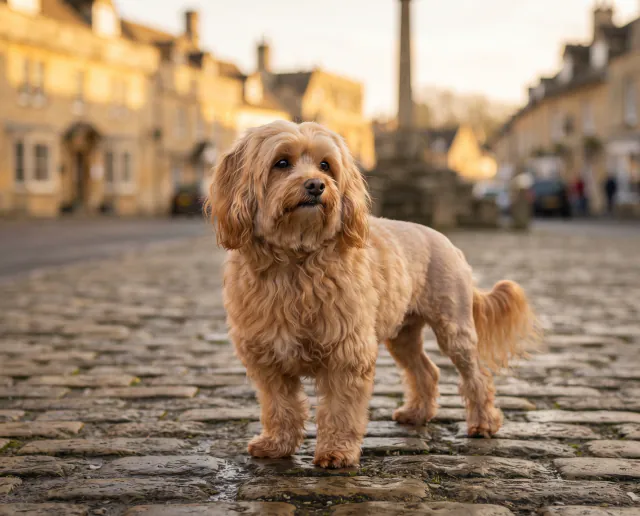
The clip gives the game away before the temperament does. A Lowchen in full show trim has its hindquarters, muzzle and tail shaved close while the mane, front legs and tail tip are left long, an old grooming style that gave the breed its German name, meaning Little Lion Dog. The look dates back several centuries in continental Europe, where small dogs of this type appear in paintings among the Bichon family, kept for company rather than any working role.
Underneath the theatrical trim is a genuinely sturdy little dog, closer in character to a confident terrier than to a delicate ornamental breed. Lowchen tend to be curious, sociable and unusually bold for their size, happy to investigate a strange noise rather than retreat from it, and most carry a cheerful readiness for both play and quiet company that makes the breed easy to underestimate on looks alone.
Temperament in the home
A well socialised Lowchen settles easily into family life, greeting visitors with enthusiasm rather than suspicion and generally getting on well with other dogs and household cats. Children are usually a good match provided play stays sensible, since the breed is more robust than many toy dogs but still small enough to be hurt by careless handling. The breed can be vocal, announcing visitors and unexpected sounds with real commitment, which suits some households and grates on others. Separation is the main weak point, since a dog developed purely for company can become distressed by long stretches alone, and building tolerance gradually from puppyhood pays off later. Flats and modest sized homes both work well, since the breed asks for company and games far more than for square metres.
Exercise and training
About 45 minutes a day, whether as one outing or split into two, suits most adults, and the breed enjoys variety over repetition, taking readily to fetch, hide and seek games and simple trick training. Many Lowchen do well in companion agility or obedience classes, where their eagerness to please and genuine intelligence show through. Training generally goes smoothly with reward based methods, since the breed responds poorly to harsh correction and considerably better to a confident, encouraging handler. Recall around distractions needs proper practice, as a curious Lowchen will happily wander off to investigate something interesting rather than stay close out of instinct. Puppies benefit from short sessions and plenty of supervised exploration rather than long structured walks.
Coat and grooming
The coat is long, dense and slightly wavy rather than tightly curled, and it does not shed in the way a double coat does, making the breed a reasonable option for owners sensitive to loose hair around the home. Regular brushing several times a week prevents matting, particularly in the mane and around the ears, and most pet owners keep the traditional lion clip or a simpler all-over trim maintained by a groomer every few weeks. Between clips, attention to the face, feet and the area under the tail keeps the dog comfortable. Ears should be checked regularly for wax and odour, and nails, which grow quickly on a light framed dog, need trimming more often than owners tend to expect.
Health and lifespan
Twelve to fifteen years is a realistic span for the breed, among the better outcomes for a small dog. Patellar luxation is the condition most commonly discussed, and asking a breeder whether the parents have been checked is a sensible question. Hip evaluation is less commonly required given the breed’s size, but a careful breeder should still be able to talk through the general soundness of the parent dogs. Eye conditions occur occasionally across small breeds generally, and testing under the BVA and Kennel Club eye scheme, where a breeder participates, is worth asking about. The breed’s genetic population is small everywhere, so a breeder who understands and manages inbreeding coefficients within the available gene pool is doing useful, if less visible, work on a puppy’s long term health.
Costs and space
Running costs for a small dog with a high maintenance coat tend to sit a little above the basic toy breed range, largely because of professional grooming every few weeks, and a working figure of £80 to £150 a month is a reasonable planning estimate rather than a fixed number. Space requirements are modest, and the breed does well in a flat or small house provided daily exercise and company are both genuinely available. What matters more than room to run is a settled routine, since the breed thrives on predictability and company rather than on open ground.
Verdict
The Lowchen suits a sociable household that wants a lively, sturdy small dog with a genuine personality behind the show ring appearance, and that is prepared to commit to regular grooming and to being patient while sourcing a puppy. Families with sensible children, couples at home a good part of the day and owners who enjoy training all tend to do well with the breed.
It is a poor fit for a home left empty for long hours, anyone unwilling to maintain the coat between clips, or a buyer expecting to find a puppy quickly, since litters remain few and far between and a wait through the breed club is the realistic route to ownership.