At a glance
Key facts
The essentials to compare before deciding whether this breed fits your home and routine.
- Size
- Small
- Lifespan
- 12 to 15 years
- Energy
- Medium
- Temperament
- Alert, lively and companionable
- Good with children
- Often good with respectful children
- Exercise
- About 1 hour a day
- Trainability
- Beginner friendly
- Grooming
- Regular brushing and professional clipping or hand stripping
- Estimated monthly cost, GBP
- £75 to £145 per month
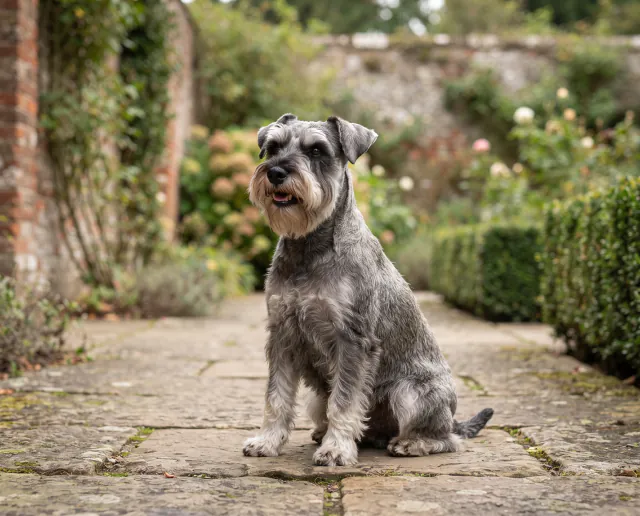
Miniature Schnauzers are sturdy small dogs with alert expressions and strong interest in family activity. They are often quick learners, enthusiastic walkers and vocal observers. The distinctive furnishings shed relatively little, but they require regular maintenance. A Schnauzer is not a passive lapdog. Terrier ancestry can appear in chasing, digging and confident responses to other dogs. Early training should develop calm choices without suppressing the breed’s curious, lively character.
Origin and purpose
The Miniature Schnauzer was developed in Germany during the nineteenth century, when breeders scaled down the Standard Schnauzer using smaller stock, with Affenpinscher and small Pinscher types among the likely contributors. The intended job was work at close quarters on farms, controlling rats around barns and stables and announcing anything unfamiliar approaching the yard. That brief explains a good deal of the modern dog. A Miniature Schnauzer notices movement and sound quickly, forms an opinion about it, and often expects a response from the household. The harsh, weatherproof coat was functional long before it became decorative. Vermin control also accounts for the readiness to chase, dig and follow small animals into awkward places. Unlike some terrier groups, the breed was bred to work alongside people rather than independently, which is part of why training tends to be straightforward.
Suitability
The breed can adapt to flats, town homes and family houses if exercise and barking are managed. Their portable size suits many owners, while their energy still supports longer outings. They often enjoy children who interact gently and follow household rules. Supervise play and provide an undisturbed bed. Many live comfortably with a resident cat when raised alongside one, although the chase response often remains towards unfamiliar cats outdoors. Miniature Schnauzers may announce visitors, corridor sounds and garden movement. Close curtains, use background sound where helpful and reward a return to quiet. Long daily absences can lead to frustration and should be planned around.
Exercise
Most healthy adults need about an hour of activity each day. Varied walks, scent searches, short retrieves and training games provide a useful balance. A secure field can allow freer movement, but recall must be proofed around wildlife. Do not assume a small dog can safely approach every larger one. Teach the owner and dog to pass at a comfortable distance. Puppies need short experiences and ample sleep. Adult fitness should be built gradually before long hill walks. Calm enrichment at home helps on days when weather limits time outside.
Grooming
The wiry coat and soft undercoat need brushing several times a week, especially through the beard, legs and armpits. Many pet dogs are professionally clipped every six to eight weeks. Hand stripping preserves a harsher coat texture but requires suitable skill and timing. Discuss options with an experienced groomer before the coat mats. Clean food from the beard and dry it after drinking. Check ears, trim nails and establish tooth brushing. Grooming costs are part of the routine budget, not an occasional extra.
Health
Ask breeders which current DNA, eye and other health checks apply and request written results for both parents. Miniature Schnauzers can experience inherited conditions, and screening choices may change as evidence develops. A responsible breeder can explain the tests rather than relying on a generic vet-checked claim. Keep the dog lean and avoid feeding rich table scraps. Repeated vomiting, abdominal discomfort, changes in urination, vision concerns or persistent skin trouble need veterinary assessment. Insurance and an emergency fund help manage investigation costs.
Choosing and training
Meet the mother and see puppies in their normal environment. Look for confident recovery from ordinary sounds, clean conditions and a breeder who asks about your routine. Avoid choosing solely by colour or a promise of no shedding. Rescue organisations can describe an adult dog’s barking, handling and dog-social needs. Train recall, loose-lead walking, quiet after an alert, grooming cooperation and calm visitor routines. Reward-based methods make productive use of the breed’s food interest and willingness to engage.
Size and lifespan
Adults typically stand 30 to 36 cm (12 to 14 in) at the withers and weigh 5 to 9 kg (11 to 20 lb), with males usually at the upper end of both figures. Dogs well outside that range are either oversized for the breed or, in the case of very small examples advertised at a premium, worth asking careful questions about. A typical lifespan is 12 to 15 years, and many stay active into their later years if they are kept lean and exercised sensibly. Body weight is the factor most within an owner’s control, and this breed gains it easily on rich food and frequent training treats. Screening themes are set out in the health section above. The practical habit is to ask for written results issued under recognised schemes rather than accepting a general assurance, and to take any certificate you cannot interpret to your own vet before committing to a puppy.
Verdict
The Miniature Schnauzer suits people who want a compact but active companion and can commit to coat care. It offers useful stamina without the space demands of a large dog. Vocal behaviour and grooming need active management. The breed is less suitable for homes expecting silence, minimal maintenance or long hours alone. With steady training, appropriate exercise and a practical grooming schedule, many become engaging household dogs with plenty of character.
Talk to a groomer and meet adult dogs before paying a deposit. The admired coat requires skilled, repeated work, while the alert temperament needs patient training. Planning for both gives a clearer picture of the time and cost involved.