At a glance
Key facts
The essentials to compare before deciding whether this breed fits your home and routine.
- Size
- Toy
- Lifespan
- 12 to 16 years
- Energy
- Medium
- Temperament
- Bold, alert and quick to announce visitors
- Good with children
- Can be good with older, careful children
- Exercise
- About 30 to 45 minutes a day in short outings
- Trainability
- Beginner friendly
- Grooming
- Brush several times weekly, with heavy seasonal shedding
- Estimated monthly cost, GBP
- £55 to £110 per month
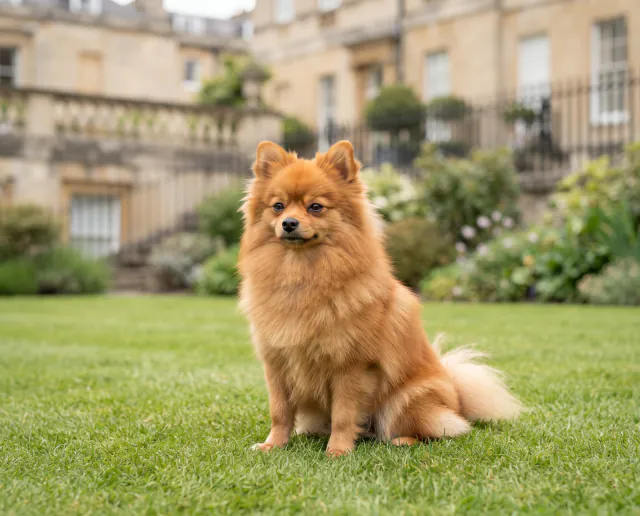
A Pomeranian is a northern spitz dog scaled down to roughly the size of a cat. Its ancestors were much larger working animals from the Baltic coast, and the breed carries the name of a region rather than of anything the modern dog would recognise. British breeders reduced the size through the nineteenth century, and Queen Victoria’s preference for smaller specimens is usually credited with driving the fashion. The character came through the process unchanged. Pricked ears, a dense stand-off coat, suspicion of strangers and a readiness to sound the alarm are standard spitz equipment, and a two-kilogram dog has all of it.
Households that treat a Pom purely as an ornament meet the version that barks at every noise in the corridor and resents handling. Treated as a small dog with opinions and a brain that wants using, the same animal is bright, comic and easy to take almost anywhere.
Suitability
Flats and small houses suit the breed well, since the exercise requirement is modest and the dog itself occupies very little room. Barking decides whether the arrangement works, because an unmanaged Pom announces post, footsteps and neighbours at volume. Teach a calm response to household noise from the start and reward quiet. Physical fragility shapes family life. An adult may weigh between two and three and a half kilograms, and a fall from a sofa or a badly judged pick-up can break a leg, so children need to be old enough to sit still and let the dog come to them. Poms are also unaware of their own dimensions and will challenge far bigger dogs, which the owner has to manage on walks. Company matters. This is not a breed that copes with an empty house all day. Committed first-time owners do well with a Pom, provided barking and dental care are treated as priorities from the start.
Exercise
Half an hour to three quarters of an hour daily, divided into two short walks, keeps most adults content. Carrying the dog everywhere is the common error, and it produces an animal that is under-exercised and poorly socialised. Let a Pomeranian walk, sniff and meet the world at ground level. A harness rather than a collar is sensible, since toy breeds have delicate windpipes. Trick training, scent games and small-scale agility give the breed the mental work it enjoys, and a Pom that has used its brain settles better. Weather cuts both ways, since a heavy double coat brings real heat risk in summer and short legs collect winter mud.
Grooming
The coat is a harsh outer layer standing away from a thick, soft undercoat, which is what creates the round outline. Brush several times a week using a line method, working through the depth of the coat in sections rather than skimming the surface, and pay attention to the ruff, behind the ears, under the front legs and around the trousers. Somewhere between about four and twelve months many puppies lose their soft coat and look distinctly moth-eaten for a while, which is normal and passes. Adults moult heavily at least once a year and leave a surprising amount of hair for their size. Shaving is not advisable, as the coat can regrow poorly in spitz breeds and it also provides insulation against heat and sun. Keep the feet and sanitary areas trimmed, check nails monthly and brush the teeth daily, because crowded toy-breed mouths develop dental disease early.
Health
Kneecap luxation is well recognised in the breed, and a skipping step or a briefly held-up back leg should be examined rather than ignored. Toy breeds can develop tracheal weakness, which often shows as a honking cough, particularly when excited or pulling on a collar. Dental disease is close to inevitable without preventive care and often means anaesthetics later in life. Thyroid problems and coat loss conditions also occur in the breed and are worth raising with a vet. Well-kept Poms often reach their mid teens. Ask breeders about eye testing, patella assessment and any DNA tests currently recommended, and ask for written evidence. Arrange insurance before any concern is recorded and keep the dog lean, as extra weight loads those small joints quickly. Food costs little at this size, but grooming, dental care and insurance make up the bulk of the monthly outlay, and any quoted figure is indicative because prices vary widely.
Choosing and training
Avoid anyone marketing teacup or micro puppies, since selecting for extreme smallness increases fragility and health problems. Meet the mother, check her teeth and movement, and ask about barking in the family line. A rescue or rehomed adult removes much of the guesswork about temperament. Training should start with handling, because a dog this size will be lifted, brushed and examined constantly and needs to find that unremarkable. Reward-based teaching suits a quick, food-motivated breed, and time spent on a settle, a quiet cue and short spells alone pays off.
Verdict
A Pomeranian suits someone who wants a portable, entertaining companion, has time at home and will commit to regular brushing and daily tooth care. Owners in flats, older owners and people who enjoy training small dogs often find the breed close to ideal.
It is unsuitable for a home with boisterous young children, for anyone who cannot tolerate barking or does not intend to train it out, and for owners expecting a small dog to be low effort. Coat care and dental work are lifelong commitments.