At a glance
Key facts
The essentials to compare before deciding whether this breed fits your home and routine.
- Size
- Medium
- Lifespan
- 12 to 14 years
- Energy
- Very high
- Temperament
- Cheerful, active and people-focused
- Good with children
- Often good with active, respectful families
- Exercise
- At least 2 hours a day
- Trainability
- Beginner friendly
- Grooming
- Brush several times weekly
- Estimated monthly cost, GBP
- £90 to £160 per month
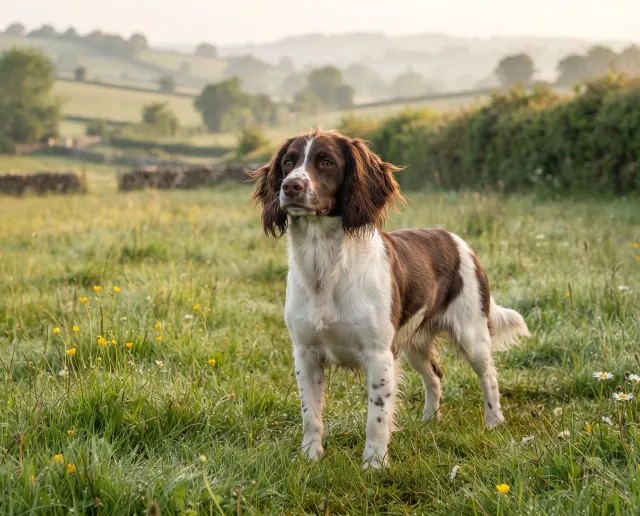
The English Springer Spaniel is an energetic gundog bred to search cover and work closely with a handler. Most are cheerful, affectionate and busy. Their drive to follow scent, retrieve and investigate water can make ordinary walks lively. Working and show-bred lines may differ markedly in build, coat and intensity. Prospective owners need an honest discussion with the breeder or rescue about the individual dog’s background rather than choosing on appearance alone.
Origin and purpose
This page covers the English Springer Spaniel, a separate breed from the Welsh Springer Spaniel despite the shared name and similar job. Land spaniels of this type were used in Britain for centuries to flush, or spring, game from cover for the guns, and later to retrieve it once shot. The English and Welsh types were formally separated in the early twentieth century, with the English Springer recognised as a distinct breed in 1902. Since then, working and show lines have diverged considerably. Working lines are lighter, shorter in coat and bred for stamina and drive in the field. Show lines are heavier, carry more feathering and are often, though not always, calmer. That split matters more than most breed generalisations, because a field-bred Springer placed in a quiet household is a common source of the frustration owners later describe.
Suitability
Springers suit active homes that enjoy outdoor routines in most weather. They often fit family life well when children understand gentle interaction and adults supervise. A young spaniel can jump, mouth and race through rooms, so calm skills need deliberate teaching. Most are sociable with other dogs and can settle with a resident cat, though the flushing instinct means an unfamiliar cat outdoors is likely to be chased. Barking is usually moderate and tied to arrivals or excitement rather than constant noise. Most want frequent company and may struggle with a full working day alone. Gardens must be secure because scent can lead them through small gaps. Expect wet coats, muddy paws and storage needs for leads, towels and training equipment.
Exercise
Healthy adults generally need at least two hours of activity, supported by mental work. Allow time to sniff and search instead of keeping every walk at heel. Gundog exercises, hidden retrieves, directional cues and controlled swimming can provide useful outlets. Recall training is essential and should progress on a long line around increasing distractions. Puppies need shorter outings and structured rest. Constant ball throwing can create frantic patterns, while varied tasks encourage concentration. Check water safety and avoid stagnant pools or fast currents.
Grooming
Brush several times a week, focusing on feathering behind the ears, beneath the legs and around the tail. Working through brambles can leave seeds, burrs and small cuts, so complete a hands-on check after walks. Spaniel ears restrict airflow and can stay damp. Dry them after swimming and seek veterinary help for smell, discharge or repeated head shaking. Trim excess hair with appropriate guidance, keep nails comfortable and brush teeth. Regular professional tidying may help owners manage a heavier show-type coat.
Health
Responsible breeders should follow current recommendations for hip, elbow, eye and relevant DNA screening. Ask to see the parents’ original results and learn what each test can and cannot show. Ear and skin problems may require ongoing care. Maintain lean body condition and measure treats used during training. Persistent limping, eye changes, unexplained agitation or unusual episodes need veterinary assessment. Some symptoms can have many causes, so avoid diagnosing them from breed lists. Arrange insurance while the puppy or dog is healthy.
Choosing and training
Ask whether the parents come from working or show lines and how they behave during quiet days. A very driven working-bred dog may be demanding in a pet-only home. Meet the mother and observe the litter without forcing interaction. Rescues can assess adult energy, recall and ability to stay alone. Teach settling, loose-lead walking, recall, delivery to hand and cooperative handling. Reward calm attention around birds and moving wildlife. Harsh corrections can damage confidence and do not replace careful management.
Size and lifespan
Adults typically stand 46 to 51 cm (18 to 20 in) at the withers and weigh 18 to 25 kg (40 to 55 lb), with working-bred dogs usually leaner and more lightly built than show-bred dogs of the same height. A typical lifespan is 12 to 14 years. Condition rather than size tends to determine how the later years go, and a Springer carrying extra weight will show joint and ear problems sooner. The screening themes described above rest on recognised schemes for hips and eyes, alongside DNA tests for several inherited conditions found in spaniels. Ask for the parents’ certificates rather than a verbal summary, check that the identification numbers match the dogs you have been shown, and take anything you do not understand to your own vet before agreeing to a puppy. Screening lowers risk across a population but says nothing definite about one individual.
Verdict
A Springer Spaniel can be a joyful partner for owners who genuinely want daily outdoor activity and training. The breed is not well matched to occasional weekend exercise or a home concerned about mud and shedding. Good outlets for scent and retrieving help it settle, while clear routines prevent constant busyness. Choose the right line, protect ear and coat health and invest in recall. In return, many Springers offer close companionship and an eager approach to shared work.
Spend time with mature dogs from the relevant line and observe them after exercise as well as during it. The ability to recover and rest is valuable. Honest discussion about drive, coat and separation needs helps prevent a poor match.