At a glance
Key facts
The essentials to compare before deciding whether this breed fits your home and routine.
- Size
- Medium
- Lifespan
- 12 to 14 years
- Energy
- High
- Temperament
- Alert, biddable and closely bonded to its people
- Good with children
- Usually very good with family children
- Exercise
- Over an hour a day plus scent and herding style games
- Trainability
- Moderate
- Grooming
- Weekly brushing, more during a heavy seasonal moult
- Estimated monthly cost, GBP
- £90 to £150 per month
Long before it herded anything, the Swedish Lapphund lived alongside the Sami people of the far north as a general purpose working dog, guarding camps, hunting and eventually turning to reindeer herding once that industry grew. Voice mattered as much as speed in that job, since a dog moving reindeer across open ground had to be heard over distance, and the breed’s willingness to bark carried straight through into the domestic dog kept today.
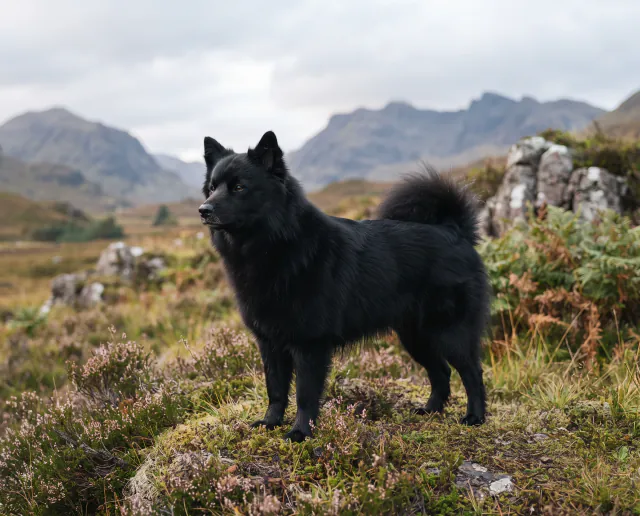
Few UK households have met one. The Lapphund remains rare here, and anyone drawn to the breed after seeing the glossy black coat and fox like face at a show should be ready for a wait, a serious conversation with the breed club, and possibly a puppy bred abroad. That scarcity says nothing negative about the dog itself. It reflects a small, carefully managed gene pool and a breed that has never been marketed for volume.
Suitability
The Lapphund is a genuinely affectionate, family oriented breed that tends to attach itself firmly to its own household and treat outsiders with polite reserve rather than suspicion. Children are usually well tolerated, and the breed’s patience and moderate size suit family life better than many spitz breeds. What catches new owners out is the attachment itself. This is not a dog that copes well with being left for long stretches, and separation related barking or howling is a realistic risk if the household is out all day. First time owners can succeed with the breed provided they accept its vocal nature and plan around its need for company, ideally with support from the breed club or an experienced mentor during the first year.
Exercise
An adult Lapphund needs a good hour or more of varied activity daily, and the breed does best when that time includes some kind of job rather than a plain loop around the park. Herding instinct tests, obedience, agility and nose work all suit a dog built to think as much as move, and a purely physical walk without any mental content tends to leave the dog understimulated even after real distance has been covered. Puppies should have exercise built up gradually while their frame develops, and off lead work needs a secure area until recall is solid, since the breed’s herding background gives it a strong interest in chasing anything that runs.
Grooming
The coat is a proper double layer, profuse around the neck and trousers and considerably heavier than its medium length suggests once the undercoat is accounted for. A weekly brush with a slicker and an undercoat rake keeps the coat in reasonable order most of the year, and that routine needs to increase sharply during the spring and autumn moults, when the amount of loose hair released daily can be considerable. The coat is naturally weather resistant and sheds dirt well once dry, so bathing is rarely necessary and can do more harm than good if it happens too often. Nails, ears and the dense ruff at the neck all deserve a regular check alongside routine brushing.
Health
The breed benefits from a working population history and is not associated with extreme conformation, though the small UK gene pool makes health testing and pedigree awareness particularly important for buyers. Hip evaluation under the BVA and Kennel Club scheme is worth asking about, and progressive retinal atrophy has been identified in the breed, for which a DNA test exists and responsible breeders use it. Some lines carry a risk of a hormonal condition affecting the adrenal glands, and a knowledgeable breeder should be able to discuss this openly rather than dismiss the question. Because the breed is active and food motivated, weight tends to be manageable with sensible portion control rather than a constant battle.
Choosing and training
Training suits reward based methods and benefits from the breed’s genuine eagerness to work with its owner rather than around them, a trait that separates the Lapphund from more independent spitz types. Barking is the behaviour most worth addressing early, since a dog bred to vocalise across distance will do so at doorbells, passing dogs and anything else it judges worth reporting unless taught an alternative from puppyhood. Finding a puppy outside Sweden usually means joining a waiting list through the breed club, since litters are infrequent and demand from informed buyers already outstrips supply most years. Meeting adult dogs before committing gives a far better sense of the vocal and social traits than photographs ever will, and the breed club is the sensible starting point for anyone serious about the breed.
Verdict
The Swedish Lapphund suits an active family or individual who wants a genuinely devoted, biddable companion, has time to include the dog in daily life rather than leaving it for long hours, and is prepared to wait for a properly bred, health tested puppy. Owners who enjoy training and dog sports tend to get the most from the breed’s willingness to work.
It is a poor choice for households wanting a quiet dog, for anyone unable to manage significant time alone, or for buyers hoping to find a puppy quickly without contacting the breed club. Patience during the search mirrors the patience the dog itself will expect once it is home.