
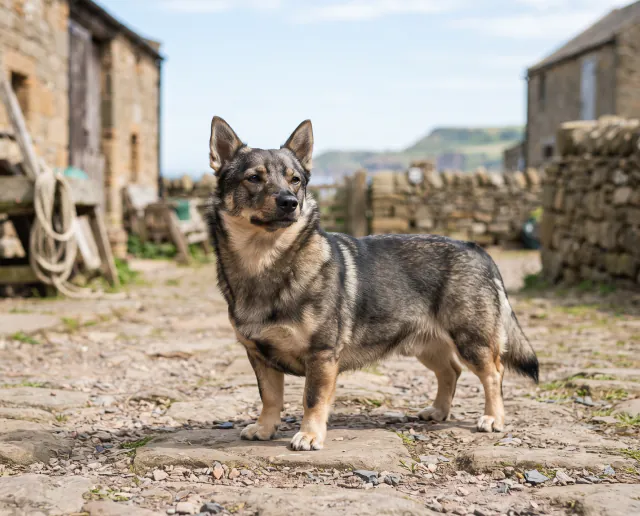
Also known as: Västgötaspets.
At a glance
Key facts
The essentials to compare before deciding whether this breed fits your home and routine.
- Size
- Small
- Lifespan
- 12 to 15 years
- Energy
- Medium to high
- Temperament
- Bold, busy and remarkably vocal for its size
- Good with children
- Usually very good with family children
- Exercise
- About 45 minutes to an hour a day, plus mental work
- Trainability
- Moderate
- Grooming
- Weekly brushing, more during a heavy seasonal moult
- Estimated monthly cost, GBP
- £75 to £135 per month
Norse sagas and archaeological finds place a dog resembling the Swedish Vallhund in Scandinavia over a thousand years ago, working farms and driving cattle by nipping at heels low to the ground, a technique that low legs and a compact body suit rather well. The physical resemblance to the Welsh Corgi has fuelled a long running argument about which breed influenced the other, and the honest answer is that nobody can prove it either way. What matters for a modern owner is less the ancestry than the working temperament that survived it intact.
That temperament is considerably bigger than the dog carrying it. A Vallhund stands barely knee height yet behaves like it owns the farmyard, patrolling boundaries, commenting on passing traffic and generally acting as though its opinion on household matters has been specifically requested. Owners used to placid small breeds are often surprised by how much dog is packed into a frame this size.
Temperament in the home
Vallhunds are confident, alert and often described as having a big dog attitude in a small dog body, which makes them entertaining company but occasionally a handful around visitors and other dogs if boundaries are not set early. The breed is generally affectionate with its own family and does well with children, though its instinct to nip at moving heels can surface as a herding behaviour toward running toddlers unless redirected. Watchdog instincts are strong, and a Vallhund will announce anyone approaching the property with genuine enthusiasm, a trait some owners value highly and others find exhausting in a terraced street. The breed tends to get on reasonably well with other dogs when properly socialised, though it rarely backs down from a confrontation despite the size difference involved.
Exercise and training
Somewhere between forty five minutes and an hour of activity most days keeps a Vallhund content, and the breed’s short legs mean pace matters less than variety and mental content. Scent work, simple agility set at appropriate heights and herding instinct tests all give the dog something to do beyond covering ground, and a bored Vallhund left understimulated tends to invent its own entertainment, usually involving barking or digging. The breed learns quickly and enjoys training, though it can be opinionated about repeating an exercise it considers already mastered. Jumping from height should be limited given the long back and short legs, since the proportions that give the breed its distinctive silhouette also put real strain on the spine if the dog is allowed to leap regularly from furniture or vehicle boots.
Coat and grooming
The double coat is dense, weatherproof and sheds a surprising amount for a small dog, particularly during the spring and autumn blowouts when daily brushing becomes worthwhile. Outside those periods a weekly session with a slicker brush and an undercoat comb through the neck and trousers keeps shedding manageable and prevents matting behind the ears and at the base of the tail. The coat is naturally self cleaning and rarely needs bathing, and frequent washing tends to strip the oils that keep it waterproof. Nails need regular trimming given the breed’s low set legs and close contact with the ground, and ears benefit from a routine check.
Health and lifespan
Twelve to fifteen years is a realistic range, and the breed’s compact working history has generally kept extreme conformation at bay, though the elongated back does carry a degree of risk for spinal problems that owners should watch for, particularly any sign of hind limb weakness or reluctance to jump. The breed club recommends DNA testing for a form of hereditary retinopathy affecting the retina, and buyers should ask to see clear or tested results for both parents. Hip evaluation under the BVA and Kennel Club scheme is also sensible given the unusual body proportions. Keeping the dog lean matters more than usual here, since extra weight on a long spine and short legs adds mechanical strain that a more conventionally built dog would not experience in the same way.
Costs and space
Monthly costs typically run between £75 and £135 for food, insurance and routine veterinary care, a modest figure reflecting the breed’s small size and generally sound health, though individual circumstances and insurer vary the total considerably. Grooming during the moult is the main seasonal task rather than an ongoing expense. Space requirements are low, and the breed adapts well to a small home provided its exercise and mental stimulation needs are genuinely met rather than assumed to be minimal because of its size. Secure boundaries matter, since a confident, low slung dog can find gaps a taller breed would not attempt.
Verdict
The Swedish Vallhund suits owners who want a small dog with real character, enjoy training and mental games, and do not mind a considerable amount of barking in exchange for an alert, entertaining companion. Active households in modest sized homes tend to find the balance of size and personality appealing.
It is a poor match for anyone wanting a quiet dog, for households with very young children unless the nipping instinct is managed early, or for owners unwilling to manage jumping and back care through the dog’s life. The breed’s small stature disguises a genuinely assertive working dog underneath it.