At a glance
Key facts
The essentials to compare before deciding whether this breed fits your home and routine.
- Size
- Medium
- Lifespan
- 12 to 14 years
- Energy
- High
- Temperament
- Bouncy, sociable and vocally enthusiastic about everything
- Good with children
- Usually very good in a lively, playful household
- Exercise
- At least an hour and a half a day of proper activity
- Trainability
- Beginner friendly
- Grooming
- Thorough brushing several times a week to prevent matting
- Estimated monthly cost, GBP
- £100 to £180 per month
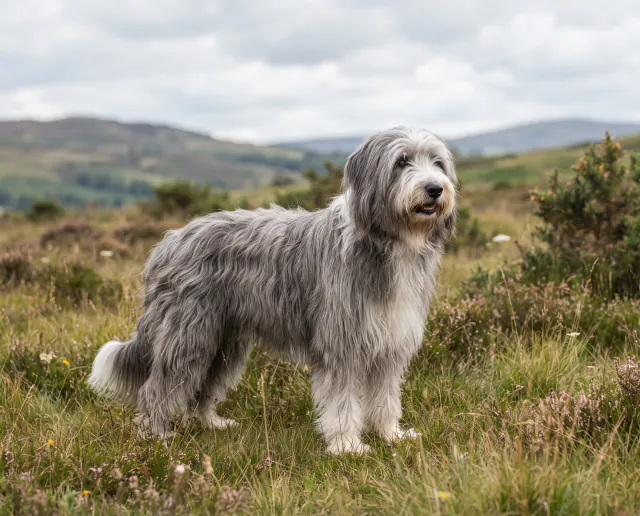
Underneath the flowing coat that wins Bearded Collies their following at Crufts is a working hill dog from the Scottish Borders, bred to gather sheep across rough, wet ground where a dog needed both stamina and a weatherproof jacket. The breed’s other name, the Highland Collie, points to that origin more clearly than the show ring silhouette does. Beardies were droving and herding dogs long before they were a grooming project, and the temperament underneath the hair still expects to work.
What strikes most new owners first is how much noise and movement comes out of a medium sized dog. Beardies bounce, quite literally, when excited, and they bark to comment on most things that interest them. Combined with a coat that mats within days of neglect, the breed asks for a level of daily commitment that its cheerful appearance does not always advertise.
Living with the breed
A Bearded Collie in the house is sociable, playful and generally good humoured with everyone it meets, including strangers, other dogs and most cats given a proper introduction. The breed keeps a puppyish enthusiasm well into middle age, and a bored adult Beardie invents its own entertainment, usually involving noise, mud or both. Vocal communication is a genuine feature rather than a fault to train out entirely, since Beardies bark, whine and even talk back in a way owners either find charming or exhausting depending on temperament. Family life suits the breed well and most get along happily with children who enjoy an active, occasionally chaotic playmate. Left alone for long stretches or under exercised, the same enthusiasm turns into destructive boredom and persistent barking that neighbours will notice.
Daily exercise
An hour and a half of proper activity most days keeps a Beardie settled, and the breed does best with variety rather than the same loop repeated. Herding instincts survive strongly enough that many Beardies enjoy structured activities such as agility, flyball or organised herding for pleasure, and these give the dog a sense of purpose that a plain walk does not. Recall is generally reliable once trained, though a Beardie that spots sheep, joggers or a group of children playing may need reminding what its job actually is that day. Puppies need the exercise built up gradually, since a fast growing medium breed with a heavy coat can overheat and overdo it before its own judgement catches up with its enthusiasm.
Training and mental work
Beardies are bright, quick to learn and generally eager to please, which makes them a genuinely realistic choice for a first time owner willing to put in consistent daily effort. The independence bred into a working hill dog shows up as occasional selective hearing rather than outright stubbornness, and reward based training with plenty of variety keeps the breed engaged far better than repetition. Barking at the doorbell, the postman or a passing dog needs addressing early, since a habit left unchecked becomes a settled part of the dog’s routine within weeks. Scent work, puzzle feeders and simple household jobs such as fetching named items suit the breed’s intelligence well between physical outings.
Grooming and shedding
The long, shaggy double coat is the defining feature of the breed and also its biggest practical demand, needing thorough brushing right down to the skin several times a week to prevent the felted mats that form quickly around the ears, armpits and britches. Many pet owners keep the coat trimmed shorter than the show standard purely to make daily maintenance manageable, and there is no disgrace in that choice. Shedding itself is moderate rather than heavy, since loose hair tends to stay caught in the coat until it is brushed out, which is precisely why regular brushing matters so much. Mud, burrs and wet weather cling to the coat readily, and a dog that has been out on a soggy walk needs proper drying and combing rather than being left to dry naturally into knots.
Health and costs
Twelve to fourteen years is typical for the breed, and most Beardies stay active and bright well into their senior years. Hip dysplasia is recorded, and BVA and Kennel Club hip scores are a reasonable thing to ask a breeder for. An autoimmune condition affecting the thyroid, hypothyroidism, appears often enough in the breed that unexplained weight gain, lethargy or coat changes in an adult dog are worth investigating through a simple blood test. Addison’s disease, a hormonal condition, has also been documented in Beardie lines and is worth breeders being asked about. Grooming, whether done at home with the right tools or handed to a professional several times a year, is the main cost driver beyond ordinary food, insurance and veterinary care, and should be factored into the monthly budget from the outset.
Verdict
The Bearded Collie suits an active household prepared to groom thoroughly and often, that enjoys a vocal, bouncy dog, and that can offer genuine daily exercise and mental engagement rather than a short walk round the block.
Anyone wanting a quiet dog, a low grooming commitment, or a breed that settles happily without much stimulation should look elsewhere. Given the time the coat and temperament both demand, the Beardie repays it with an exceptionally sociable and good humoured companion.