Also known as: Polski Owczarek Nizinny.
At a glance
Key facts
The essentials to compare before deciding whether this breed fits your home and routine.
- Size
- Medium
- Lifespan
- 12 to 14 years
- Energy
- Medium
- Temperament
- Shrewd, watchful and considerably more stubborn than it looks
- Good with children
- Often good with children who join family activities
- Exercise
- About 45 minutes to an hour, plus mental engagement
- Trainability
- Moderate
- Grooming
- A shaggy coat needing several thorough sessions weekly
- Estimated monthly cost, GBP
- £100 to £170 per month
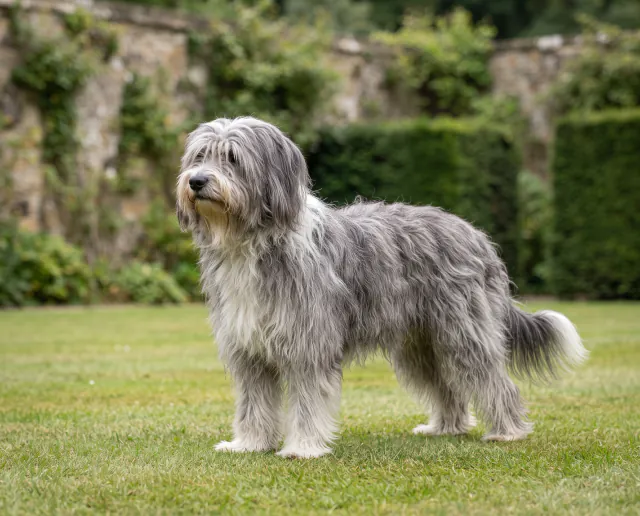
Behind the curtain of hair that gives the Polish Lowland Sheepdog its shambling, comical appearance is a working herder that spent centuries moving sheep and cattle across the Polish plains and doubling as a farmyard guard at night. The breed survived a near total collapse after the Second World War, rebuilt from a handful of surviving dogs by a small group of dedicated breeders, and that recent history of scarcity has left the gene pool narrower than many established breeds, a fact worth knowing before buying.
People meeting the breed for the first time tend to focus entirely on the coat, and understandably so, but the more relevant trait for daily life is the mind underneath it. This is a shrewd, independent thinking dog that arrives at its own conclusions about most situations, and owners expecting an easygoing, biddable pet purely because the breed looks soft and shaggy are often surprised.
Suitability
The Polish Lowland Sheepdog, often shortened to PON, tends to be reserved with strangers and genuinely devoted to its own household, watching visitors carefully before deciding whether they merit a welcome. It is an effective watchdog, alerting readily to anything unusual, and that vigilance does not switch off easily even in a quiet suburban street. Children who are part of the family are usually treated well, often supervised in an almost herding fashion, but the breed’s assertiveness and occasional pushiness with unfamiliar children mean introductions need managing. Other dogs are generally accepted, particularly with early socialisation, though the breed can be territorial in its own home and garden.
Exercise
Physical needs sit at a moderate level for a working breed, and forty five minutes to an hour of exercise a day generally satisfies an adult PON, provided some of that time involves genuine mental engagement rather than a straightforward loop of the park. Herding style games, scent work and structured training sessions all suit the breed’s need for a task better than distance alone. The coat and relatively low set frame mean the breed copes reasonably well with cooler weather but can overheat if pushed hard in summer, so timing and pace matter more than raw mileage. Puppies should have exercise kept gentle while the frame develops, avoiding repeated jumping or forced road walking.
Grooming
This is one of the more demanding coats among herding breeds, long, dense, harsh on top with a soft undercoat, and it mats readily if brushing lapses even for a week or two. Several thorough sessions a week, working right down to the skin with a proper brush and comb rather than skimming the surface, are needed to prevent the felting that quickly becomes a serious problem behind the ears, under the legs and around the collar. Many pet owners choose to keep the coat trimmed shorter than the traditional show length purely for practicality, which reduces the workload considerably without compromising the dog’s comfort. The hair over the eyes needs regular attention too, kept either trimmed back or tied up so the dog can see properly and eye irritation is avoided.
Health
The breed is broadly robust, though hip dysplasia occurs and hip scoring under the BVA and Kennel Club scheme is a reasonable request of any breeder. Progressive retinal atrophy and other inherited eye conditions have been identified in some lines, and DNA testing along with BVA and Kennel Club eye scheme results for breeding parents are worth asking about directly. Given the narrow post war gene pool the breed was rebuilt from, responsible breeders pay close attention to pedigree diversity, and buyers should feel able to ask how a breeder manages that. Weight control matters as it does for any medium sized dog, particularly since a thick coat can disguise gradual weight gain from a casual glance.
Choosing and training
Training benefits from an owner who can be patient, consistent and genuinely interesting to the dog, since a PON that finds a session boring will simply stop cooperating rather than push through out of eagerness to please. Reward based methods work considerably better than any attempt at forceful correction, which tends to entrench the breed’s naturally stubborn streak rather than resolve it. Early, wide socialisation reduces adult wariness of strangers and unfamiliar situations. Litters are limited outside Poland, and prospective owners should expect to register interest with the breed club and wait, since demand regularly outstrips the small number of puppies bred each year.
Verdict
The Polish Lowland Sheepdog suits owners who want a characterful, watchful herding breed and are genuinely prepared for a demanding grooming routine and a dog with its own opinions. Households that enjoy training as an ongoing project rather than a box to tick tend to get on well with it.
It is a poor match for anyone wanting a low maintenance coat, instant obedience, or a dog content to be left to its own devices without company and mental engagement.