At a glance
Key facts
The essentials to compare before deciding whether this breed fits your home and routine.
- Size
- Large
- Lifespan
- 10 to 12 years
- Energy
- High
- Temperament
- Tough, independent and closely bonded to its handler
- Good with children
- Better suited to older children in an experienced household
- Exercise
- Well over 2 hours a day of demanding physical work
- Trainability
- Experienced handler
- Grooming
- Weekly brushing with two heavy seasonal coat changes
- Estimated monthly cost, GBP
- £120 to £210 per month
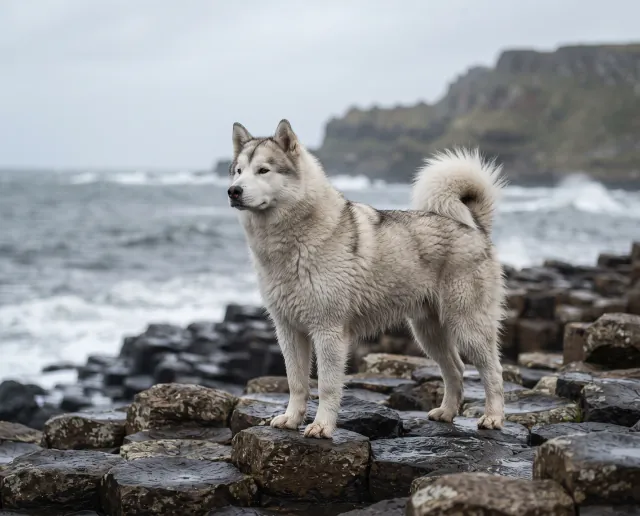
Inuit communities across the Canadian Arctic depended on this dog for transport, hunting and, in genuine emergencies, survival, and the breed has changed remarkably little from the type used a thousand years ago. Unlike breeds refined by European show culture, the Canadian Eskimo Dog was shaped almost entirely by function in one of the harshest inhabited environments on earth, where a dog that could not pull, hunt seal at a breathing hole or survive a night buried in snow during a storm simply did not survive to breed. That history makes it one of the most genuinely primitive dogs still recognised today, and the numbers reflect how narrowly it avoided disappearing altogether after motorised transport largely replaced sled teams through the twentieth century.
Very few exist outside northern Canada, and anyone drawn to the breed should expect a long search, a probable need to look abroad, and a serious conversation with a breed club about whether their household actually suits a dog built for a landscape and a job that no longer exists in most owners’ lives.
Temperament in the home
This is not a companion breed in the way most pedigree dogs are, and it should not be approached as one. Canadian Eskimo Dogs bond closely with their handler but tend to be reserved, sometimes aloof, with people outside the immediate household, and the breed’s centuries of working in loosely structured teams have left a strong, sometimes forceful, sense of hierarchy that shows up around other dogs. Same sex aggression and general dog to dog friction are well documented, and a household already keeping other dogs needs to think carefully before adding one. Prey drive is intense, a direct inheritance from a breed once used to hunt seal, polar bear and other Arctic game, and small pets are not safe around an adult of this breed under any circumstances. Tolerance of solitude is unusually good compared with most working breeds, since sled dogs were traditionally kept in outdoor teams rather than indoor packs, though this should never be mistaken for a licence to neglect company and stimulation entirely.
Exercise and training
Very few UK households can genuinely meet this breed’s exercise requirement, which runs to several hours of hard physical work most days once mature, ideally including pulling activity such as a weighted rig, canicross or a proper sledding setup on suitable ground. A casual walk, however long, does not come close to satisfying a dog built to haul loads across ice for hours at a stretch. Training requires an experienced handler comfortable with an independent, occasionally stubborn mind that was never bred to defer automatically to a human’s preference. Recall off lead is not something to rely on given the prey drive and independence involved, and secure fencing of real height and strength is essential. Puppies still need this built up gradually, but the eventual adult workload is not something a first time owner should take on without a clear plan and, ideally, mentoring from an experienced breed club member.
Coat and grooming
The dense double coat sheds heavily twice a year during a full coat blow, when daily raking is needed for a couple of weeks to keep on top of the volume of loose undercoat, and a weekly brush suffices the rest of the year to prevent matting and remove ordinary shedding. The coat is genuinely weatherproof, built to insulate against extreme cold, and needs almost no bathing, since natural oils and the dense undercoat do most of the work of keeping the dog clean and dry. British winters are mild by comparison with the breed’s origins, and owners need to watch for overheating in anything beyond cool weather rather than worrying about cold at all.
Health and lifespan
Ten to twelve years is typical, and the breed benefits from a comparatively narrow history of deliberate inbreeding avoidance forced by necessity in small, geographically isolated communities, though hip dysplasia still occurs as it does in most active large breeds, and hip scoring under the British Veterinary Association and Kennel Club scheme is a fair question for any breeder to answer. General good health is often reported anecdotally by owners, but that should never substitute for asking a breeder directly what testing their own lines have had.
Costs and space
Given how rare the breed is, buyers should expect a wait for a litter, should be prepared that some dogs come from overseas breeders, and should treat the breed club as the essential first point of contact rather than a general breeder search. Monthly costs of around a hundred and twenty to two hundred and ten pounds cover food, insurance and routine care, though a serious pulling sport hobby adds equipment costs on top. Space needs to be real acreage or open access to safe running ground, not a modest garden, since the exercise requirement cannot be met within typical suburban boundaries.
Verdict
The Canadian Eskimo Dog suits an experienced owner with land, genuine commitment to a demanding daily exercise regime, an interest in pulling sports, and no small pets or other dogs prone to conflict in the household. It suits people willing to wait for a puppy and to work closely with the small, dedicated community that keeps the breed going.
It is entirely unsuitable for a first time owner, a household wanting a sociable companion for other dogs, a family relying on off lead reliability, or anyone drawn purely to the Arctic look without appreciating the working drive underneath it.