At a glance
Key facts
The essentials to compare before deciding whether this breed fits your home and routine.
- Size
- Medium
- Lifespan
- 10 to 13 years
- Energy
- Very high
- Temperament
- Sociable, alert and built for sustained hard work
- Good with children
- Usually very good, sociable dogs bred to work alongside families
- Exercise
- Over two hours a day, ideally with a job to do
- Trainability
- Moderate
- Grooming
- Twice weekly brushing, with a dramatic seasonal coat blow
- Estimated monthly cost, GBP
- £110 to £190 per month
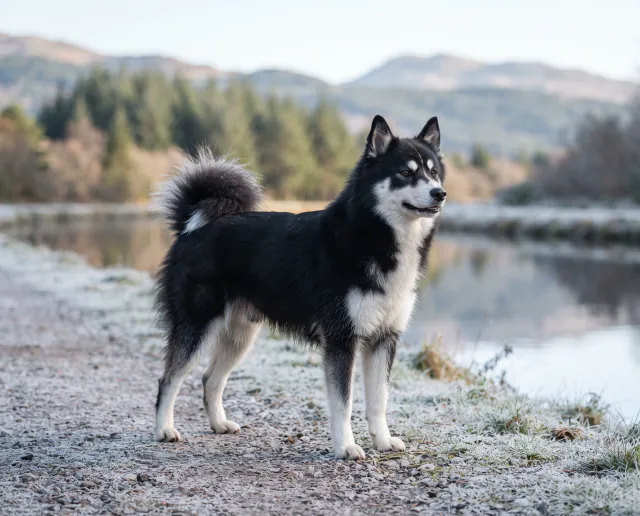
In the Sakha Republic of eastern Siberia, this spitz has spent generations pulling sleds, hunting elk and helping reindeer herding families cover ground in conditions that would stop most dogs and plenty of vehicles. Unlike some northern breeds developed purely for haulage, the Yakutian Laika was expected to live inside the family unit as much as beside it, which produced a spitz that combines serious working stamina with a notably sociable, people oriented temperament. That combination is part of what makes the breed appealing and part of what makes it a poor fit for most ordinary households.
Numbers outside Russia remain very small, and the breed currently sits on the UK Kennel Club’s Imported Breed Register rather than holding full recognition. Anyone drawn to the type should expect a genuine wait, should expect that some available dogs will have been imported directly from Russia or from established European breeders, and should treat the small number of specialist owners and the breed club abroad as the sensible first point of contact rather than a general puppy listing site.
Suitability
The temperament suits families reasonably well, since the breed’s working history involved close daily contact with children and adults alike, and most individuals are friendly rather than reserved with people they know. That sociability, though, comes paired with very high energy and a strong instinct to move, pull and work, none of which sits comfortably in a household expecting a low key companion. Other small animals can trigger a hunting response built over generations of working alongside elk hunters, so cats and smaller pets need careful, gradual introduction with no guarantee of success. Left without company or purpose for long stretches, a Yakutian Laika is prone to genuine distress rather than mild boredom, which rules the breed out for households where someone is not around for much of the day.
Exercise
This is the section that eliminates most prospective owners honestly considering the breed. More than two hours of exercise a day is realistic for an adult, and that figure works far better when some of it involves proper work rather than a leisurely walk, whether that means canicross, bikejoring, scooter pulling or structured sled style activity on suitable ground. A Yakutian Laika given only a conventional daily walk tends to develop its own entertainment, usually destructive, vocal or escape related. Puppies need exercise scaled sensibly to protect developing joints, but the underlying drive to move is present from an early age and needs channelling through mental engagement and controlled activity rather than restraint alone.
Grooming
The dense double coat is built for extreme cold and sheds accordingly, with a dramatic blow of undercoat once or twice a year that produces enough loose hair to genuinely surprise a first time owner. Twice weekly brushing with an undercoat rake keeps the coat in reasonable order the rest of the year, rising to daily sessions during a heavy shed. The coat is largely self cleaning and low odour, and bathing is rarely needed outside of something the dog has rolled in. Nails, ears and the feathering around the feet and tail deserve routine attention alongside the main coat work.
Health
A lifespan of ten to thirteen years is typical for a working spitz of this type, and the breed benefits from a comparatively broad genetic base given its working population history, though UK data remains limited given how few dogs are here. Hip dysplasia is worth screening for as a matter of course in an active, medium to large working dog, and a UK buyer should ask about hip scoring under the BVA and Kennel Club scheme where breeders have had it carried out. Eye conditions reported in northern spitz breeds generally are worth asking about, along with any DNA testing the specific breeding lines have used. Keeping the dog at a lean working weight and providing genuine outlets for its energy does more for long term soundness, physical and behavioural, than any amount of supplementation.
Choosing and training
Training benefits from an early start and a practical, purpose driven approach, since the breed responds better to structured activity with a clear point than to repetitive obedience drilling for its own sake. Recall around wildlife needs years of consistent work before it can be trusted off lead, given the hunting instinct bred into the type. Socialisation with people, other dogs and everyday environments should start early, though the breed’s inherent sociability gives most owners a reasonable foundation to build on. Anyone approaching a breeder or the breed club should expect searching questions in return, since responsible breeders of a rare, working oriented type want assurance that a dog capable of this much work is going somewhere it will actually get to do some.
Verdict
The Yakutian Laika suits an active, rural or semi rural household prepared to provide genuine daily work, not just exercise, and willing to navigate the practicalities of a rare, imported line breed. Owners drawn to sled sports, canicross or working dog activities, and who value a sociable, family oriented temperament in an otherwise demanding dog, tend to get on with the breed very well.
Sedentary households, anyone working long hours away from home, or owners hoping for a low maintenance northern breed based on looks alone should choose something else. The coat and the striking appearance are the least demanding part of what this dog asks of an owner.