At a glance
Key facts
The essentials to compare before deciding whether this breed fits your home and routine.
- Size
- Giant
- Lifespan
- 10 to 12 years
- Energy
- Medium
- Temperament
- Calm, watchful and protective of its family
- Good with children
- Often good with its own family under supervision
- Exercise
- About 45 minutes to an hour of steady walking daily
- Trainability
- Experienced handler
- Grooming
- Weekly brushing, more for the long coated variety
- Estimated monthly cost, GBP
- £150 to £240 per month
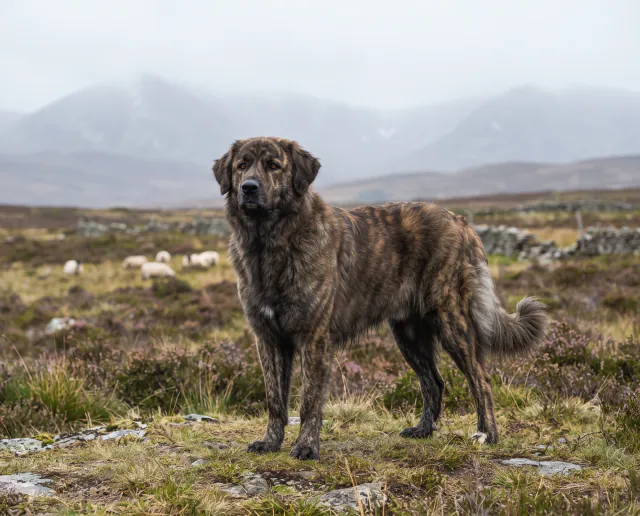
High in the Serra da Estrela, Portugal’s tallest mainland range, shepherds once relied on a dog heavy and confident enough to face down wolves without needing to be told what to do. That job shaped an animal that thinks for itself, commits fully when it decides a threat is real, and otherwise spends most of the day lying quietly and watching. Little of that has changed in the dogs now kept as companions and guardians today, and prospective owners do well to treat the breed’s working origins as current information rather than history.
Numbers outside Portugal are modest and growing slowly, so buyers should expect to wait for a litter and to do some travelling, possibly as far as Portugal itself, to meet breeders and dogs directly. The national breed club is the sensible starting point for anyone serious about the breed rather than an approach through general advertising sites.
Suitability
This is not a dog for a first pet or a household short on time, space or confidence around a large, strong willed animal. An adult male can weigh more than fifty kilograms and stands close to knee height on most adults, and the breed’s independent guarding instinct means it decides for itself what warrants a response, which needs shaping through careful upbringing rather than assumed away. Families with older children who understand calm behaviour around dogs, and who live somewhere with genuine space, tend to get on well with the breed. Anyone hoping for an obedient companion that instantly defers to every instruction should look elsewhere, since a degree of independent judgement is precisely what the breed was bred to have.
Exercise
Physically the Estrela is not a marathon runner, and around forty five minutes to an hour of steady walking a day satisfies most adults, supplemented with time to patrol a secure garden or paddock. The breed is happiest with a job or a purpose, even an informal one such as watching over livestock, poultry or simply the boundary of a property, and dogs without any outlet for that instinct can become restless or overly vigilant indoors. Puppies grow into a substantial frame over a long period and need their exercise kept gentle and controlled, favouring short outings and free play over repeated jumping, stairs or forced road walking while bones are still developing. Recall around livestock, wildlife or unfamiliar dogs needs early, patient work, since a dog of this size acting on instinct is difficult to physically manage after the fact.
Grooming
Two coat varieties exist within the breed, a shorter dense coat and a longer, harsher one, and both carry a thick undercoat suited to mountain winters. Weekly brushing keeps loose hair under control on the short coated variety, while the long coated version needs more frequent attention around the ears, chest and legs to prevent matting. Both types shed heavily, particularly during seasonal coat changes, and an Estrela living indoors will leave a noticeable amount of hair on floors and furniture. Nails, ears and the skin under a heavy coat all deserve a regular check, since problems can go unnoticed longer under dense fur than on a short coated breed with no undercoat.
Health
A working life expectancy of ten to twelve years is typical for a giant breed of this build. Hip and elbow scoring under the British Veterinary Association and Kennel Club scheme is a reasonable and important question for any breeder, given the strain a heavy frame places on developing joints. Bloat, more formally gastric dilatation and volvulus, is a genuine emergency risk in deep chested giant breeds and owners should know the warning signs, including restlessness, unproductive retching and a visibly swollen abdomen, and treat them as reasons to seek immediate veterinary attention. Heart health is worth discussing with a breeder as part of general due diligence in a large breed. Keeping the dog at a lean weight throughout its life reduces strain on joints that already carry a great deal of mass.
Choosing and training
Early, extensive socialisation matters more with this breed than with most, since a guardian instinct left unshaped by exposure to ordinary people, situations and other animals can settle into blanket suspicion rather than measured judgement. Reward based training, begun the day a puppy arrives and continued through adolescence, builds the calm confidence the breed needs far better than any attempt at dominance or force, which tends to produce a defensive rather than a biddable dog. Because litters are uncommon, buyers should be prepared to ask detailed questions of a breeder about temperament in the parents, how puppies are raised and socialised, and what support is available after purchase. Insurance, a secure vehicle able to carry a dog of this size safely, and boundary fencing that will hold under real pressure are practical purchases that belong on the same list as the puppy itself.
Verdict
The Estrela Mountain Dog suits an experienced owner with genuine space, a settled household and the patience to raise a giant guardian breed properly from puppyhood through to a calm, well socialised adult. It rewards that investment with a devoted, watchful companion rather than a demanding one.
Anyone wanting a biddable dog with no guarding instinct, living in a small home, or new to dog ownership altogether should look at a different breed, since the qualities that make an Estrela effective at its original job are exactly the ones that make it unsuitable for casual ownership.