
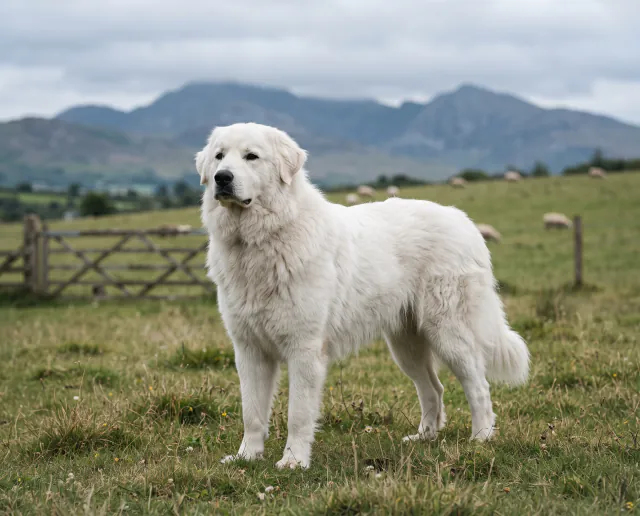
Also known as: Cane da Pastore Maremmano-Abruzzese.
At a glance
Key facts
The essentials to compare before deciding whether this breed fits your home and routine.
- Size
- Giant
- Lifespan
- 11 to 13 years
- Energy
- Medium
- Temperament
- Calm, watchful and fiercely protective of its own
- Good with children
- Often good with the children it is raised alongside
- Exercise
- About 45 minutes to an hour of steady activity
- Trainability
- Experienced handler
- Grooming
- Weekly brushing, heavier during a substantial seasonal moult
- Estimated monthly cost, GBP
- £160 to £250 per month
Shepherds in the hills of central Italy needed a dog that could be left with the flock for days without instruction, deciding on its own whether an approaching shape was a wolf, a stranger or nothing worth troubling over. The Maremma Sheepdog was shaped by that responsibility, and the white coat was chosen deliberately so a shepherd could tell dog from wolf at a glance in poor light. Nothing about the breed’s temperament has been softened for suburban life, because until quite recently there was little demand for that.
Interest in the breed has grown among smallholders keeping poultry or small livestock, and the dog does that job with real competence. It is a different matter as a household pet in an ordinary garden, where the same independence and territorial instinct that make it an excellent guardian can make it a difficult, occasionally overwhelming companion for anyone unprepared for the temperament.
Living with the breed
A Maremma left to its own devices treats the boundary of its territory as a serious matter, and visitors or delivery drivers can find themselves loudly challenged before being accepted. Inside a settled home the dog is often surprisingly calm, sleeping through much of the day and reserving its energy for patrolling at dawn, dusk and through the night. Family members are usually treated with real warmth once the dog considers them part of its charge, and children raised alongside the breed are commonly well protected, though visiting children and unfamiliar adults need proper supervision and introduction. This is not a dog that seeks constant physical affection in the way many companion breeds do, and owners hoping for that response are often disappointed.
Daily exercise
Physical needs are moderate for the size of the dog, since a Maremma working a smallholding covers ground steadily rather than running hard. Forty five minutes to an hour of activity a day, combined with space to patrol a secure garden between walks, generally satisfies an adult. Recall cannot be relied upon in open country, since the breed’s instinct is to investigate anything unfamiliar rather than return on command, so off lead exercise needs a properly enclosed area. Puppies grow into a genuinely large frame and should be given gentle, limited exercise while bones and joints are still developing, with free play favoured over forced distance work.
Training and mental work
Obedience in the conventional sense does not come naturally to a breed selected for independent decision making over centuries, and owners expecting quick, biddable results will be frustrated. Early and extensive socialisation matters more here than almost any other aspect of raising the breed, introducing the puppy calmly to visitors, other animals, traffic and everyday household activity so that adult wariness stays proportionate. Firm, patient and consistent handling from the first weeks at home pays dividends later, since correcting an adult Maremma that has learned to ignore instruction is a genuinely difficult undertaking. Mental engagement through simple tasks, guarding responsibilities or structured routine suits the breed better than trick training or repetitive games.
Grooming and shedding
The dense double coat sheds heavily, particularly during a substantial seasonal blowout when daily brushing becomes necessary to manage the volume of loose hair. Outside that period, a thorough weekly brush keeps mats from forming, especially behind the ears, under the front legs and around the trousers at the back end. The coat is naturally weatherproof and self cleaning to a large degree, so bathing is needed only occasionally. Nails, ears and teeth require the routine checks any large dog needs, and owners should be prepared for a genuinely significant amount of hair around the home during the moult.
Health and costs
Hip and elbow dysplasia are recognised concerns in the breed, and breeders should provide hip and elbow scores under the BVA and Kennel Club scheme for both parents. As a deep chested giant breed, the Maremma carries a real risk of gastric dilatation and torsion, and owners should learn the warning signs and treat any sudden distress or unproductive retching as an emergency. Costs run high for a giant breed, commonly in the region of a hundred and sixty to two hundred and fifty pounds a month once food, insurance and veterinary care are accounted for, and giant breed insurance premiums reflect the size related risks. Litters are limited outside Italy, so anyone serious about the breed should expect to contact the breed club and wait.
Verdict
The Maremma Sheepdog suits smallholders, rural households with livestock or poultry to protect, and experienced owners who want a genuine guardian rather than a conventional pet. Space, secure fencing and realistic expectations of the temperament all matter enormously.
It is the wrong choice for a first dog, a suburban garden, anyone wanting an affectionate lap companion, or a household unable to manage a large, strong willed and territorially minded dog around visitors and other animals.