At a glance
Key facts
The essentials to compare before deciding whether this breed fits your home and routine.
- Size
- Giant
- Lifespan
- 12 to 15 years
- Energy
- Medium
- Temperament
- Calm, watchful and formidably strong
- Good with children
- Often good with family children given careful supervision
- Exercise
- About an hour a day, with secure space to patrol
- Trainability
- Experienced handler
- Grooming
- Weekly brushing, more during seasonal shedding
- Estimated monthly cost, GBP
- £150 to £260 per month
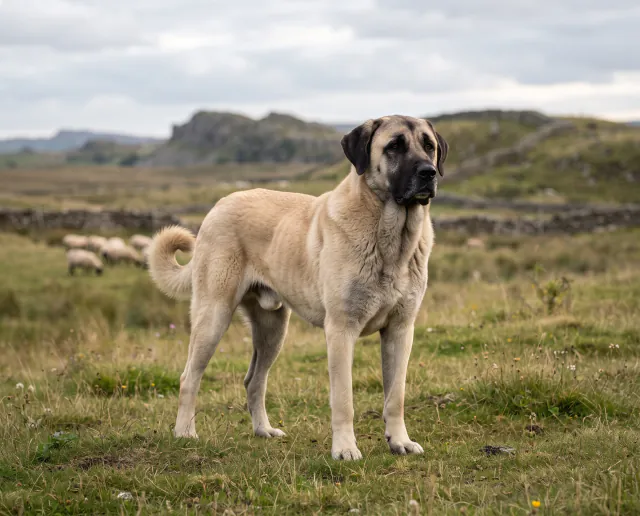
On the plains around the Turkish town of Sivas, a shepherd historically relied on the Kangal to do a job no fence could manage, standing between a flock and predators including wolves, and doing it without waiting for instructions. The dog needed weight, jaw strength and enough nerve to hold ground against an animal considerably more dangerous than a stray dog, and generations of that selection produced one of the most physically imposing guardian breeds still working today.
None of that has been softened for pet ownership. A Kangal kept as a family dog retains the size, the strength and the independent decision making that made it useful in Anatolia, and every part of managing the breed at home has to account for what an adult male weighing well over 50 kilograms can do if it decides, on its own judgement, that something needs stopping.
Living with the breed
Around its own family a well socialised Kangal is typically calm, dignified and surprisingly gentle for a dog of this size, often choosing to lie quietly and observe rather than seek attention. Strangers approaching the home or the family are a different matter entirely, and the breed’s guarding instinct means visitors, delivery drivers and unfamiliar dogs can all trigger a serious, sustained response unless the dog has been extensively socialised from puppyhood and the owner maintains firm control throughout adulthood. Children within the household are often treated with real gentleness, though supervision remains essential given the dog’s sheer size and the potential for accidental harm during play that a smaller breed would never cause. This is not a breed for a first dog, a first large dog, or anyone without direct experience handling powerful, independent minded animals.
Daily exercise
Physically the Kangal is not a high mileage dog, and around an hour of activity a day satisfies most adults, many of whom are content patrolling a secure area rather than covering distance on a lead. What the breed needs more than exercise volume is space, since a guardian instinct with nowhere legitimate to direct itself tends to focus on the household’s own boundary in ways that can become fixation or frustration. A large, securely fenced garden or paddock does more for a Kangal’s wellbeing than any amount of walking. Puppies grow into an enormous frame over roughly eighteen months, and controlled, moderate activity during that period protects joints that will eventually carry a very heavy adult body.
Training and mental work
Handling a Kangal well requires calm, confident, consistent leadership from day one, since a dog bred to make independent decisions about threats will do exactly that whether or not its owner agrees with the assessment. Reward based methods work, but so does absolute clarity about boundaries, particularly around greeting strangers, reacting to other dogs and settling on command in situations the dog would rather control itself. Professional guidance from a trainer experienced with livestock guardian breeds is a sound investment rather than an admission of difficulty. Mental engagement matters, and structured settling exercises, scent work and simple obedience give the breed’s considerable intelligence somewhere useful to go, though the dog will never become the eager to please, endlessly biddable type seen in gundog breeds.
Grooming and shedding
The coat is short and dense rather than long, which keeps grooming demands modest for a dog this size, and a weekly brush is generally sufficient outside the moult. Seasonal shedding is heavier than the short coat suggests, and twice yearly periods of more frequent brushing keep loose hair under control. The breed tolerates a wide range of weather comfortably given its outdoor working origins, though very hot conditions still warrant shade, water and reduced activity in the heat of the day. Nails, ears and the substantial dewclaws some individuals carry all need routine attention, and the sheer size of the dog makes early handling training for grooming and veterinary examination genuinely important.
Health and costs
The breed is generally long lived for its size, commonly reaching twelve to fifteen years, which reflects a working population selected for soundness rather than appearance. Hip and elbow evaluation under the BVA and Kennel Club scheme is worth insisting on given the joint stress a giant frame carries, and entropion affecting the eyelids has been noted in the breed. Bloat is a risk in any large, deep chested dog, and owners should know the signs, restlessness, unproductive retching and a distended abdomen, and treat them as an emergency. Costs run high relative to most breeds, since food, medication dosing and insurance all scale with body weight, and a realistic monthly figure sits between £150 and £260, with veterinary and insurance costs the most variable elements.
Verdict
The Turkish Kangal Dog suits experienced owners with genuinely secure rural or semi rural property, realistic expectations about guarding behaviour, and the confidence to handle a large, independent, powerful animal without relying on physical force. Livestock keepers and those wanting a serious property guardian, rather than a sociable pet, are the households the breed was built for.
It is entirely unsuitable for first time owners, urban or suburban homes without secure boundaries, or anyone hoping for a friendly, low maintenance giant breed. The strength and independence that make the Kangal an effective guardian make it a genuinely demanding companion in any setting that is not built around that role.