At a glance
Key facts
The essentials to compare before deciding whether this breed fits your home and routine.
- Size
- Giant
- Lifespan
- 8 to 10 years
- Energy
- Medium
- Temperament
- Calm, watchful and independently minded guardian
- Good with children
- Can be good with children it has grown up alongside
- Exercise
- About 45 minutes a day plus time to patrol a garden
- Trainability
- Experienced handler
- Grooming
- Weekly brushing, with a heavy seasonal coat blow
- Estimated monthly cost, GBP
- £160 to £270 per month
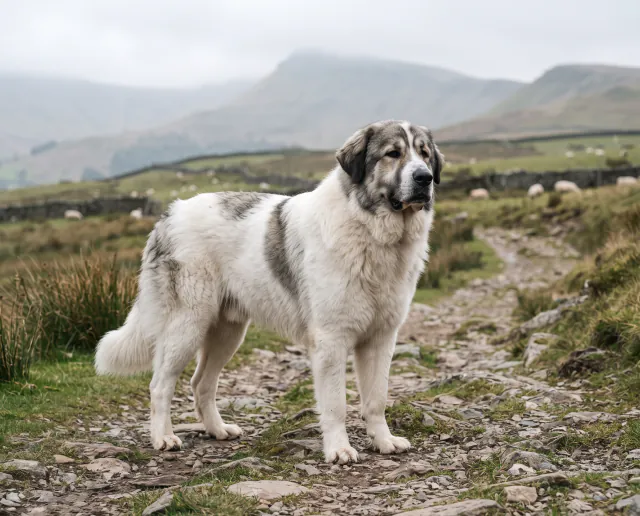
For centuries the Pyrenean Mastiff worked the high pastures of Aragon, walking alongside flocks of merino sheep and standing between them and wolves without a shepherd giving the order. Nobody trained a dog like that to sit or heel. The job needed an animal that could judge a threat on its own account, hold its ground through the night and stay unbothered by weather, distance or boredom. That working brain has not gone anywhere, and it arrives in a modern home whether the owner asked for it or not.
Numbers remain small outside Spain, and the UK Kennel Club carries the breed on its Imported Breed Register rather than issuing it full recognition, which tells a buyer most of what they need to know before going any further. Litters born here are occasional, waiting lists are the norm rather than the exception, and some owners end up bringing a puppy or an adult over from Spain or another European country with an established breeding population. The Spanish national breed club and its UK contacts are a sounder route than any casual advert, and patience is simply part of acquiring the breed.
Living with the breed
Inside the house a well-socialised Pyrenean Mastiff tends to be dignified rather than demonstrative, content to occupy a large patch of floor and observe rather than join in. Loyalty to its own household runs deep, but that same instinct makes many individuals wary of strangers on their territory, and visitors need a proper introduction rather than an assumption of instant friendliness. The breed was never bred to defer readily to human direction the way a sheepdog was, so respect has to be earned through consistent handling rather than assumed from a puppy’s willingness to please. Children raised with the dog are usually treated gently, but supervision matters given the sheer bulk involved, and any child not part of the household should be introduced with care.
Daily exercise
Physical needs are moderate for the size of the animal. Forty five minutes to an hour of walking suits most adults, and a mastiff of this kind is not looking for a running partner so much as a reason to be outdoors with its people. Puppies need firm limits on forced exercise, stairs and jumping while the skeleton is still forming, since a frame that will eventually carry sixty kilograms or more takes a long time to mature safely. A securely fenced garden matters more than distance covered on a lead, because much of the breed’s natural behaviour is patrolling boundaries rather than covering ground, and that patrolling often includes barking at anything crossing the perimeter after dark.
Training and mental work
Handling this breed calls for consistency rather than force. Harsh correction tends to produce a dog that either shuts down or decides the handler is not worth listening to, whereas calm, repeated, reward based work over a long puppyhood builds a reliable adult. Early and ongoing exposure to visitors, other dogs, vehicles and everyday town noise reduces the guarding instinct’s tendency to overreact later on. Recall is rarely the breed’s strong suit, since a dog bred to make its own decisions at distance from a shepherd was never selected for instant obedience, and off lead reliability near livestock or strangers should not be assumed without years of proven training. A secure vehicle and a lead strong enough for the dog’s weight are basic requirements from day one.
Grooming and shedding
The dense double coat is weather resistant and, in adults, reasonably long around the neck and hindquarters. A weekly brush through with a slicker and an undercoat rake keeps mats from forming, and during the spring and autumn coat change that routine needs to become almost daily as the undercoat comes away in quantity. Drool is a genuine feature of the breed, particularly after drinking or in warm weather, and furniture, walls and clothing all need to be defended accordingly. Nails, ears and the folds around a heavy jowl all deserve regular checking.
Health and costs
A life of eight to ten years is typical for a dog of this size, and hip and elbow dysplasia are recognised concerns across giant breeds, so a UK buyer should ask any breeder about hip and elbow scoring under the BVA and Kennel Club scheme for both parents. Bloat, properly called gastric dilatation and volvulus, is a genuine emergency risk in deep chested giants, and owners should know the signs and where their nearest out of hours vet is located before they need it. Heart conditions are worth asking about too. Monthly costs run high, commonly £160 to £270 once food, insurance and routine veterinary care are added together, and that figure should be treated as a starting point rather than a ceiling, since medication and any surgery are priced by body weight. Insuring while the dog is still a puppy avoids exclusions building up over time.
Verdict
The Pyrenean Mastiff suits an experienced owner with rural space, secure boundaries and a realistic appetite for the patience the breed demands, both in finding a puppy and in raising one. Households that value a calm, watchful presence over an eager, biddable one, and that can absorb the costs a giant dog brings, are the right fit.
Anyone wanting fast obedience, a sociable dog with strangers, a small garden or a first experience of dog ownership should look at a different breed entirely. This is a working guardian temperament housed in a body that leaves no margin for getting the management wrong.