At a glance
Key facts
The essentials to compare before deciding whether this breed fits your home and routine.
- Size
- Giant
- Lifespan
- 10 to 12 years
- Energy
- Medium
- Temperament
- Aloof, independent and fiercely protective at night
- Good with children
- Can be good with children it has known from puppyhood
- Exercise
- About 45 minutes a day at a measured pace
- Trainability
- Experienced handler
- Grooming
- Twice weekly brushing, with one heavy seasonal coat blow a year
- Estimated monthly cost, GBP
- £160 to £270 per month
High on the Tibetan plateau, this breed guarded monasteries and nomadic camps against wolves and leopards, working largely on its own initiative through the hours when a shepherd was asleep and a threat was most likely to appear. That role shaped an animal built to make its own decisions, patrol independently and treat darkness as its working shift rather than as time to be quiet. Very little about the temperament has softened for suburban life, and prospective owners do best to take the working history literally rather than as background colour.
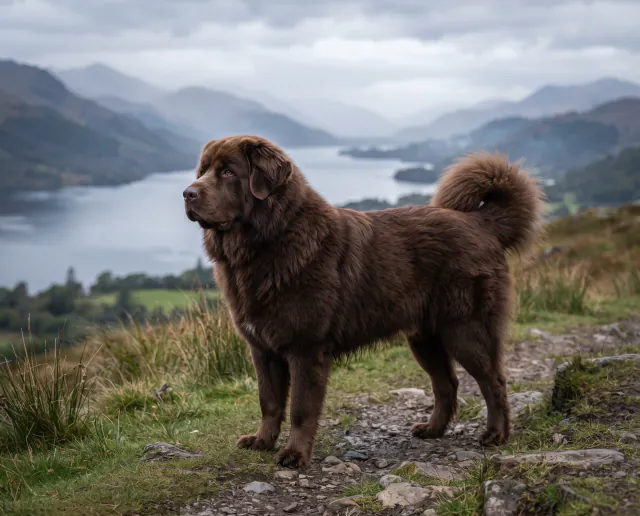
Physically imposing, heavily coated and unmistakably ancient in type, the Tibetan Mastiff draws attention for its appearance, but appearance is the least demanding part of owning one. The mind behind the coat is independent to a degree that surprises owners used to more biddable breeds, and living successfully with the dog means working with that independence rather than expecting it to disappear with training.
Living with the breed
Around its own family a settled adult is often calm and even affectionate, but the breed rarely shows the eager, attention seeking warmth of a retriever, and strangers should expect reserve rather than friendliness as the default response. Territorial guarding is instinctive and largely nocturnal, and a Tibetan Mastiff left to patrol a garden after dark will bark at anything crossing the boundary, a habit that has ended more than one neighbour dispute in areas with houses close together. This is not a fault that training reliably removes, since it sits close to the core of what the breed was bred to do, and anyone in a terraced house or a development with thin party walls should think hard before taking one on. Children raised alongside the dog from puppyhood are usually treated with tolerance, though supervision remains necessary given the size difference involved.
Daily exercise
Exercise needs are moderate rather than extreme. Around 45 minutes of steady walking a day, with time to explore and investigate rather than a fast pace, suits most adults well, reflecting a breed built for endurance at altitude rather than speed. Puppies need considerably more caution, since a Tibetan Mastiff can take up to three years to reach full physical and mental maturity, and forced exercise, jumping and excessive stairs during the growing period place unnecessary strain on joints that will eventually support a substantial frame. Secure fencing matters more than distance walked, since the instinct to patrol and, given the chance, to roam and investigate a perimeter runs deep.
Training and mental work
The breed is intelligent but not naturally inclined to work for a handler in the way a sheepdog or gundog is, and training progress tends to be slower and more negotiated than a first time owner might expect. Harsh methods generally backfire, producing a dog that becomes more defensive rather than more compliant, whereas patient, consistent, reward based work over a long period builds a functional working relationship. Socialisation from the earliest weeks, covering people, other dogs, traffic and everyday noise, matters enormously given the size and guarding instinct the adult will carry. Recall should never be assumed reliable off lead, since an independently minded guardian breed at distance from its handler tends to follow its own judgement rather than a whistle.
Grooming and shedding
The dense double coat sheds moderately for most of the year and then drops in dramatic quantity once annually, usually as the weather warms, when an owner can expect to be removing handfuls of undercoat daily for several weeks. Outside that period, brushing twice a week with a slicker and an undercoat rake keeps the coat in reasonable order and prevents matting behind the ears and around the culottes on the hindquarters. The mane around the neck, particularly pronounced in males, needs particular attention. Nails, ears and teeth should be checked on a routine schedule alongside the coat work.
Health and costs
A lifespan of ten to twelve years is typical, reasonable for a breed of this size. Hip and elbow dysplasia occur as they do across most giant breeds, and a UK buyer should ask any breeder for hip and elbow scores carried out under the BVA and Kennel Club scheme for both parents. Hypothyroidism has been reported in the breed and is worth discussing with a vet if symptoms such as unexplained weight gain or coat changes appear later in life. Entropion and other eyelid conditions affecting the looser skinned head shape are also worth asking about. Costs run high for a dog this size, typically £160 to £270 a month once food, insurance and routine care are combined, and that range should be treated as indicative given how much insurers and individual circumstances vary. Buyers should expect a genuine wait for a puppy, since litters are infrequent, and the breed’s specialist club is a more reliable starting point than a general listing site.
Verdict
The Tibetan Mastiff suits an experienced owner in a rural or semi rural setting, with secure boundaries, tolerant or distant neighbours, and a genuine interest in a guardian breed rather than a conventional companion dog. Owners who respect the independence rather than fighting it tend to build a lasting, if undemonstrative, relationship with the dog.
Anyone in a densely populated area, wanting an obedient or sociable dog, or hoping for a quiet night time presence should choose differently. This is a working guardian mind in a household pet’s setting, and it does not change to suit the setting.