At a glance
Key facts
The essentials to compare before deciding whether this breed fits your home and routine.
- Size
- Giant
- Lifespan
- 7 to 9 years
- Energy
- Medium
- Temperament
- Gentle, devoted and calm despite great size
- Good with children
- Often good, though sheer size calls for supervision around toddlers
- Exercise
- About 90 minutes a day across two walks, plus swimming
- Trainability
- Moderate
- Grooming
- Daily brushing through a heavy double coat, with major seasonal shedding
- Estimated monthly cost, GBP
- £150 to £260 per month
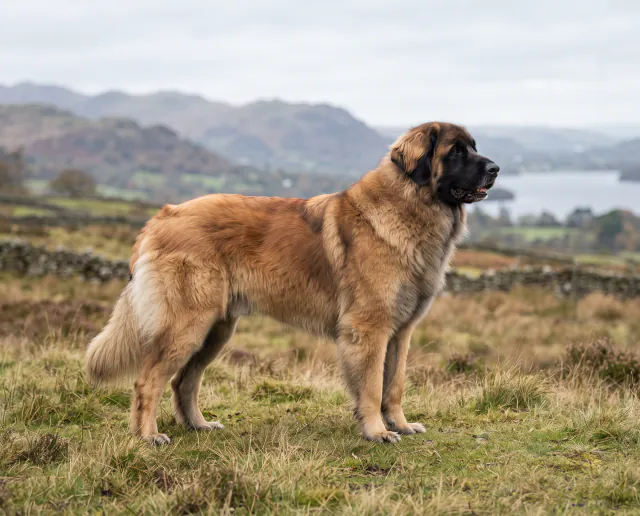
The town of Leonberg in southern Germany gave the breed both its name and its purpose. A nineteenth century breeder wanted a dog that echoed the lion on the local coat of arms, crossing Newfoundlands, Saint Bernards and Pyrenean Mountain Dogs to produce a large, calm, water capable animal that could also pull carts and work an Alpine farm. The result survives largely unchanged in temperament, an imposing, thickly coated dog that is far gentler than its size suggests.
Owners describe the breed as steady rather than showy. A Leonberger tends to move through a household at its own pace, unbothered by noise or visitors, and forms close bonds with the whole family rather than a single person. A gentle temperament does not make the animal itself any lighter to live with. A grown male can stand close to 80 centimetres at the shoulder and carry well over 60 kilograms, and every decision about cars, doorways, insurance and veterinary dosing follows from that scale.
Suitability
A settled adult Leonberger is calm indoors, tolerant of children and generally easy going with visitors, though a puppy this size can knock over a toddler without any intention to. Supervision matters less for temperament than for sheer physics during the growing months. The breed is not naturally aggressive, but its size alone can be intimidating to strangers, and a confident, well socialised dog makes life easier for everyone who meets it. First time owners can manage a Leonberger, provided they accept the size, the coat and the shortened life expectancy before committing, and ideally have handled a large dog before. A garden helps, though it is secure boundaries and a settled routine that matter more than raw acreage.
Exercise
Around ninety minutes a day, split across two outings, suits most adults, and the breed enjoys hiking, carting and swimming far more than repetitive road walking. Water work comes naturally, a legacy of the Newfoundland in its ancestry, and a Leonberger given access to a safe lake or river will often choose it over almost anything else. Puppies need a gentler approach. Rapid growth on a heavy frame makes early stairs, forced runs and jumping from height unwise until the joints have matured, usually well past a year old. Free play in a garden does more good at that stage than structured walking. Adult dogs that miss regular activity tend to put on weight quickly, which then adds further strain to hips and elbows already carrying a great deal of frame.
Grooming
The double coat is long, dense and weather resistant, and it demands proper daily attention rather than an occasional pass with a brush. Matting builds quickly behind the ears, under the legs and around the collar area if left, and the breed blows its undercoat heavily twice a year, shedding in handfuls for several weeks at a stretch. A good slicker brush and an undercoat rake, used little and often, keep the coat manageable between the seasonal moults. Bathing an animal this size is a proper undertaking, and most owners find a walk-in shower or a trip to a professional groomer more practical than a domestic bath. Nails, ears and the feathering around the feet need regular checking, since mud and debris collect readily in a coat built to shed water.
Health
Life expectancy sits at the shorter end for a large breed, typically seven to nine years, and prospective owners should weigh that honestly against the years of care the breed demands. Leonberger polyneuropathy, an inherited nerve disorder identified in the breed, can be screened for using a DNA test, and breeders who understand the results avoid mating two carriers to each other. Hip and elbow scoring under the BVA and Kennel Club scheme is standard practice for a dog this size and should be checked in both parents before a puppy is chosen. Giant breeds carry a higher lifetime risk of bone cancer than smaller dogs, and any persistent lameness or swelling in an adult deserves prompt veterinary attention rather than a wait and see approach. Keeping the dog lean throughout its life reduces strain on joints that already carry a heavy load.
Choosing and training
Leonbergers are biddable by the standards of a giant breed and generally keen to please, which makes reward based training realistic from puppyhood, though sessions should stay short given how quickly a young dog tires. Early socialisation to traffic, other dogs and ordinary household noise pays off later, when a nervous reaction in a fully grown dog is far harder to manage than in a small one. The breed is not widely bred in the United Kingdom, so litters can take patience to find, and the national breed club is a sensible first point of contact for anyone serious about buying one. Meeting adult dogs and asking directly about temperament, health testing and the size of the litter’s parents tells a buyer more than any advertisement.
Verdict
The Leonberger suits a household with real space, a car built for a large dog, a stable routine and a genuine tolerance for hair and drool. Owners drawn to a calm, biddable giant that mixes well with children and other animals tend to find the breed lives up to its reputation.
Anyone short on space, put off by heavy coat care, or unwilling to accept a life expectancy well short of a decade should look at a smaller breed instead. This is a dog bought with clear eyes about what the following years will involve.