
At a glance
Key facts
The essentials to compare before deciding whether this breed fits your home and routine.
- Size
- Giant
- Lifespan
- 5 to 8 years
- Energy
- Low to medium
- Temperament
- Devoted, calm and quietly protective of the family
- Good with children
- Often good, though bulk and drool need managing
- Exercise
- About 45 minutes a day in cool conditions
- Trainability
- Experienced handler
- Grooming
- Weekly wipe down of folds plus routine brushing
- Estimated monthly cost, GBP
- £150 to £260 per month
Living with the breed
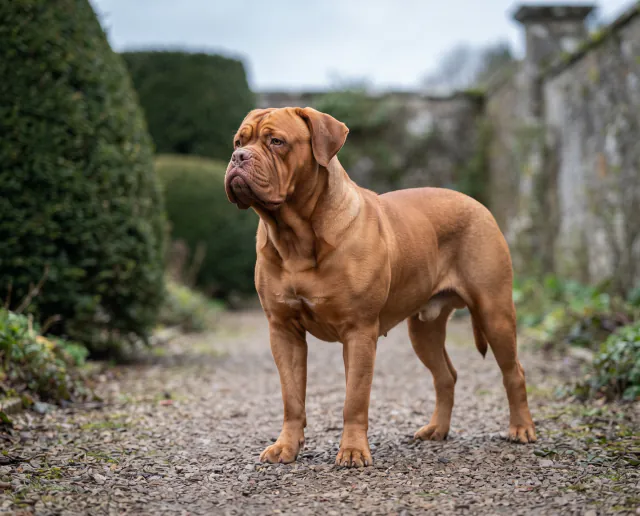
A Dogue de Bordeaux in the room changes how people move around it. The head is the widest of any dog breed relative to body size, the chest is barrel deep, and the whole animal carries itself with a low, rolling confidence that owes more to French cattle droving and estate guarding than to any modern sport. The breed nearly disappeared twice in its own country before enthusiasts rebuilt it from a handful of survivors, and something of that hardiness remains even though the temperament today is far gentler than the dog’s guarding history suggests.
Most Dogues are affectionate to the point of leaning their full weight on a favourite person, patient with children they have grown up alongside, and naturally wary of strangers without being trained to be. That wariness needs shaping early, because a dog approaching fifty kilograms that decides on its own who is welcome is a liability rather than an asset. Households take on a serious commitment here, and the breed’s short life expectancy is part of that commitment from the first week.
Indoors the dog is usually a slow, deliberate presence rather than a nuisance, content to occupy a doorway or a cool tiled floor and observe. Drool is constant and often flung sideways when the dog shakes its head, so furniture, walls and dark clothing all take a share of it. Snoring and heavy breathing at rest are normal for the shape, though laboured breathing during any activity is not and should prompt a vet visit. Long absences suit the breed badly, since it forms close attachments and can become anxious or destructive left alone for a full working day.
Daily exercise
Around forty five minutes of unhurried walking most days keeps an adult content, and the breed has no appetite for distance work or repetitive running. Heat is the limiting factor far more than fitness. The short flattened muzzle restricts airflow, so exercise belongs in the cool part of the morning or evening through a British summer, with shade and water always available and any sign of heavy panting or reluctance treated as a stop signal. Puppies need particularly conservative handling, since a frame heading toward fifty kilograms or more places real load on immature joints, and controlled lead walks matter far more than free galloping during the first year and a half. Swimming is rarely a natural skill for a dog this front heavy and should never be assumed safe without supervision.
Training and mental work
Early, consistent socialisation is not optional with a breed this large and this naturally protective. Puppy classes, varied visitors and calm exposure to normal life reduce the risk of a wary adult becoming a reactive one. Training responds best to a patient, reward based approach, since the breed can be stubborn and physical corrections are both unnecessary and unwise on a dog of this strength. Priorities are a reliable recall, calm behaviour with visitors, walking without pulling, and settling on command, all taught while the dog still weighs less than the handler. Mental stimulation can stay modest, since chew items, scent scattering and short structured sessions suit a breed that tires quickly in warm weather and prefers company to activity.
Grooming and shedding
The coat itself is short, dense and easy to maintain with a weekly brush, and shedding is moderate rather than dramatic. The real grooming job is the face. Wrinkles and folds around the muzzle and forehead trap moisture and debris and need wiping and drying most days to prevent soreness and infection developing underneath. Ears should be checked weekly, particularly if they hang close to the head, and nails need regular trimming on a dog whose gait depends on sound feet. Bathing is occasional. Skin allergies and localised infections in skin folds are common enough in the breed that owners should learn what a healthy fold looks like and act quickly on redness or smell.
Health and costs
Life expectancy sits at the shorter end of the giant breeds, typically five to eight years, and this is one of the clearest facts a prospective owner should absorb before falling for a puppy. Hip and elbow dysplasia occur often enough that scoring under the BVA and Kennel Club scheme is worth asking a breeder about directly, alongside heart screening, since cardiac issues are recognised in the breed. Cancer rates run high in giant breeds generally, and owners should be alert to unexplained lumps, weight loss or lethargy rather than assuming age alone explains them. Breathing difficulty, heat intolerance and the strain that excess weight places on joints and organs are all shaped by the head and body type, and the Kennel Club’s Breed Watch lists the breed among those where judges and buyers are asked to pay particular attention to exaggeration and its consequences. Keeping the dog lean matters more here than in almost any other breed. Costs run high because everything scales with size, from food and bedding to medication doses and insurance premiums, and a monthly figure of £150 to £260 is indicative rather than fixed.
Verdict
The Dogue de Bordeaux suits an experienced owner with space, a cool climate strategy for summer, a realistic view of a short life expectancy, and the physical confidence to manage a very large, very strong dog through its full life. Families who commit early to socialisation and handle the breed’s protective instincts sensibly often describe an unusually devoted companion.
Anyone wanting a long lived dog, a low maintenance face, or a breed suited to hot weather or a first time household should look elsewhere. The combination of size, drool, short lifespan and a naturally guarding temperament asks a great deal of any home that takes it on.