Also known as: Mastino Napoletano.
At a glance
Key facts
The essentials to compare before deciding whether this breed fits your home and routine.
- Size
- Giant
- Lifespan
- 7 to 9 years
- Energy
- Low to medium
- Temperament
- Protective, aloof with strangers, devoted to family
- Good with children
- Better suited to households with older, confident children
- Exercise
- Two short, gentle walks a day totalling about 45 minutes
- Trainability
- Experienced handler
- Grooming
- Minimal coat care but daily wrinkle cleaning is essential
- Estimated monthly cost, GBP
- £190 to £300 per month
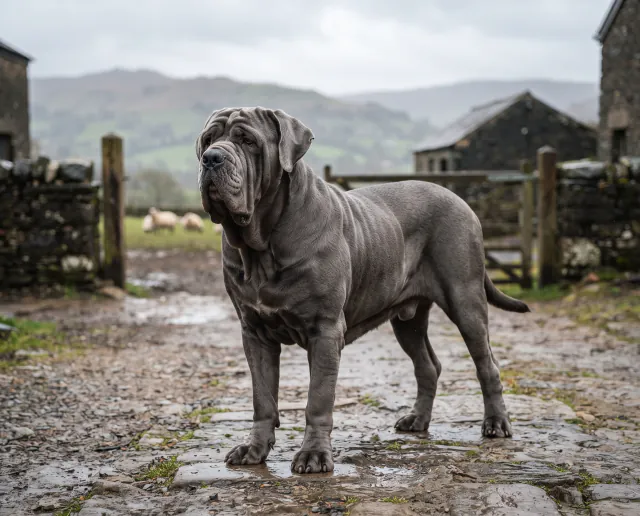
A Neapolitan Mastiff looks like it has borrowed a coat two sizes too large. Loose, hanging skin folds across the face, neck and shoulders were bred deliberately into the type in southern Italy, where the dog worked as a farm and property guardian, and its wrinkled hide was said to help it shrug off a bite. Whatever the working logic, the look remains the breed’s defining feature, and it comes with maintenance obligations that a smoother coated guardian breed simply does not have.
The temperament matches the appearance. This is a dog bred to guard rather than to socialise, and most individuals remain watchful and reserved with strangers throughout their lives even when raised well. That combination of enormous size, guarding instinct and a naturally suspicious temperament makes the Neapolitan Mastiff one of the more demanding giant breeds to own responsibly, and it is not a breed to take on without having handled a large, strong willed dog before.
Living with the breed
Within the family, a well socialised Neapolitan Mastiff is typically calm and deeply attached, often described as glued to whichever room its owner occupies. With strangers the picture changes, and a dog that is aloof or actively suspicious of visitors is normal for the breed rather than a fault to train out entirely. That makes early, extensive socialisation essential, ideally starting the moment a puppy comes home, so the adult dog learns to distinguish an ordinary visitor from a genuine threat. Households with frequent visitors, young children’s friends coming and going, or a generally busy front door need to think carefully about whether this temperament suits their routine. The Kennel Club’s Breed Watch scheme lists the Neapolitan Mastiff among breeds with specific points to monitor, including excess skin, eyelid conformation and mobility, and buyers should understand what that means before choosing a breeder.
Daily exercise
Exercise needs are low for a dog of this size, and two shorter, gentle walks a day suit most adults better than one long outing. The breed is not built for speed, distance or heat, and a heavy, low slung frame tires quickly in warm weather or on hard ground. Puppies need particular care, since a body this heavy grown too fast places real strain on developing joints, and free, unstructured play is safer than forced walking or repeated stairs during the first eighteen months. Adult dogs that get too little movement put on weight readily, which then compounds joint problems the build already predisposes them to. A cool, shaded spot to rest matters as much as the walk itself, since the breed overheats easily.
Training and mental work
Training a Neapolitan Mastiff is less about tricks and more about establishing calm, reliable behaviour around people and other animals for the rest of its life. The breed can be strong willed and slow to respond to repetition, so consistency and patience from the first weeks matter more than intensity. Because adult size and guarding instinct combine to make an unmanageable dog a genuine safety concern, professional guidance from a trainer experienced with large guarding breeds is a sound investment rather than an indulgence. Mental stimulation can be modest, since the breed is naturally more inclined to watch and rest than to work through puzzles, but structured settling exercises, where the dog learns to lie quietly while life continues around it, pay off for years afterward.
Grooming and shedding
The short coat itself needs only a weekly brush and sheds at a moderate rate, which sounds easy until the wrinkles are accounted for. Folds around the face, neck and shoulders trap moisture, food and debris, and need daily wiping and drying to avoid the skin infections the breed is prone to. The eyelids often sit loosely, which can expose the surface of the eye to irritation, and any redness or discharge deserves veterinary attention rather than a wait. Drool is heavy and constant, worse after drinking or exertion, and most owners accept it as a permanent feature of the house rather than something to solve. Nails and the pads of a heavy dog also need regular checking, since an uneven gait develops quickly if they are neglected.
Health and costs
Life expectancy is short, often eight years or less, and the combination of size, skin folds and joint structure brings a heavier burden of veterinary attention than many breeds. Hip and elbow scoring under the BVA and Kennel Club scheme is important before choosing a puppy, and skin fold dermatitis, eyelid conditions requiring surgical correction, and joint problems all appear often enough in the breed to ask a breeder about directly. Deep chested giant breeds also face a heightened risk of bloat, and it pays to learn what an emergency looks like before one ever happens, since minutes matter once it starts. Costs run high across the board, commonly £190 to £300 a month once food, insurance and routine care are added together, and that figure can rise sharply if skin or joint treatment becomes necessary.
Verdict
The Neapolitan Mastiff suits an experienced owner with space, patience for socialisation, a tolerance for mess and a genuine interest in a guarding breed rather than a purely companion dog. Handled well, it is devoted to its family and an imposing, effective deterrent without needing to do anything at all.
First time owners, households with a constant flow of visitors, or anyone unprepared for heavy drool and demanding skin care should choose a different breed. This is a dog for people who have thought carefully about what a serious guardian breed involves.